 How to Choose the Right Teaware for Different Types of White Tea?
 Why Isn't Jasmine Black Tea as Fragrant as Jasmine Green Tea?
 Tea Pouring Techniques: 5 Essential Water Pouring Methods for Better Tea Taste






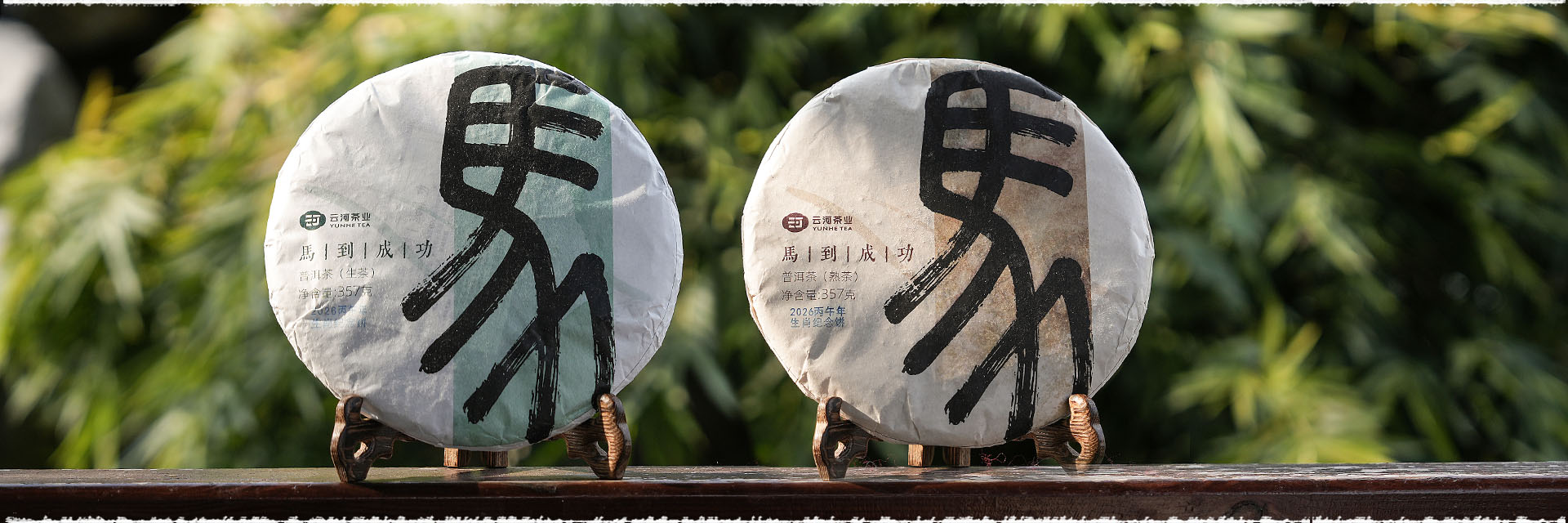
Among China’s many tea traditions, Cha Puer holds a unique place. But what exactly is Cha Puer?
At its simplest, Cha Puer (often called Pu-erh tea) is a special type of fermented tea. It is made only in Yunnan province, China. But to call it just “tea” is like calling a vintage Bordeaux “just grape juice.”
Unlike green or black teas that are best enjoyed fresh, Cha Puer is a “living tea”. It contains beneficial microbes that allow it to ferment and improve with age. In the world of tea connoisseurs, “Cha” means tea, and “Puer” refers to the historic trading hub where this ‘Living Antique’ was once sourced from ancient forests.
Origin & History: The Terroir of Yunnan

Cha Puer, also known as Pu-erh or Pu er, is more than just a tea-making method. It is a protected geographical treasure.
You can only call it champagne if it comes from the Champagne region of France. Similarly, real Pu-erh tea must be made from large-leaf tea trees. People know these trees as Camellia sinensis var. assamica grown in the mist-shrouded mountains of Yunnan Province, China.
In 2008, Pu-erh tea was officially recognized by China’s General Administration of Quality Supervision, Inspection and Quarantine as a protected geographical indication (GI) product. Its core production areas are strictly limited to Xishuangbanna, Pu’er, and Lincang.
Beyond this unique terroir, it can no longer be called true Pu’er.
The Yunnan Large-Leaf Variety
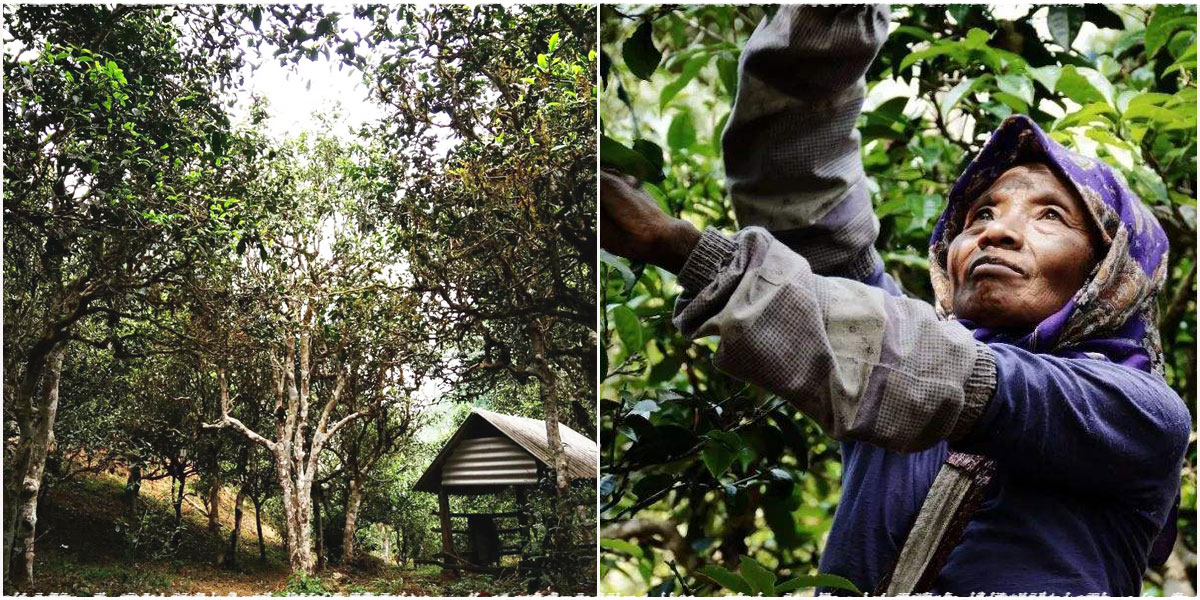
The terroir of Pu-erh begins in its DNA.
The Yunnan large-leaf variety (Camellia sinensis var. assamica) is often regarded as a living fossil in the evolutionary history of tea trees.
Unlike the small-leaf shrubs used for green tea, these ancient trees have thick leaves. They also have very high levels of tea polyphenols, often over 30%. Their deep root systems draw abundant minerals from Yunnan’s red, high-altitude soils.
This unique terroir gives Pu-erh leaves a strong structure and a special “forest character.” It has a wild mountain energy and great aging potential that cannot be found anywhere else on Earth.
The Ancient Tea Horse Road
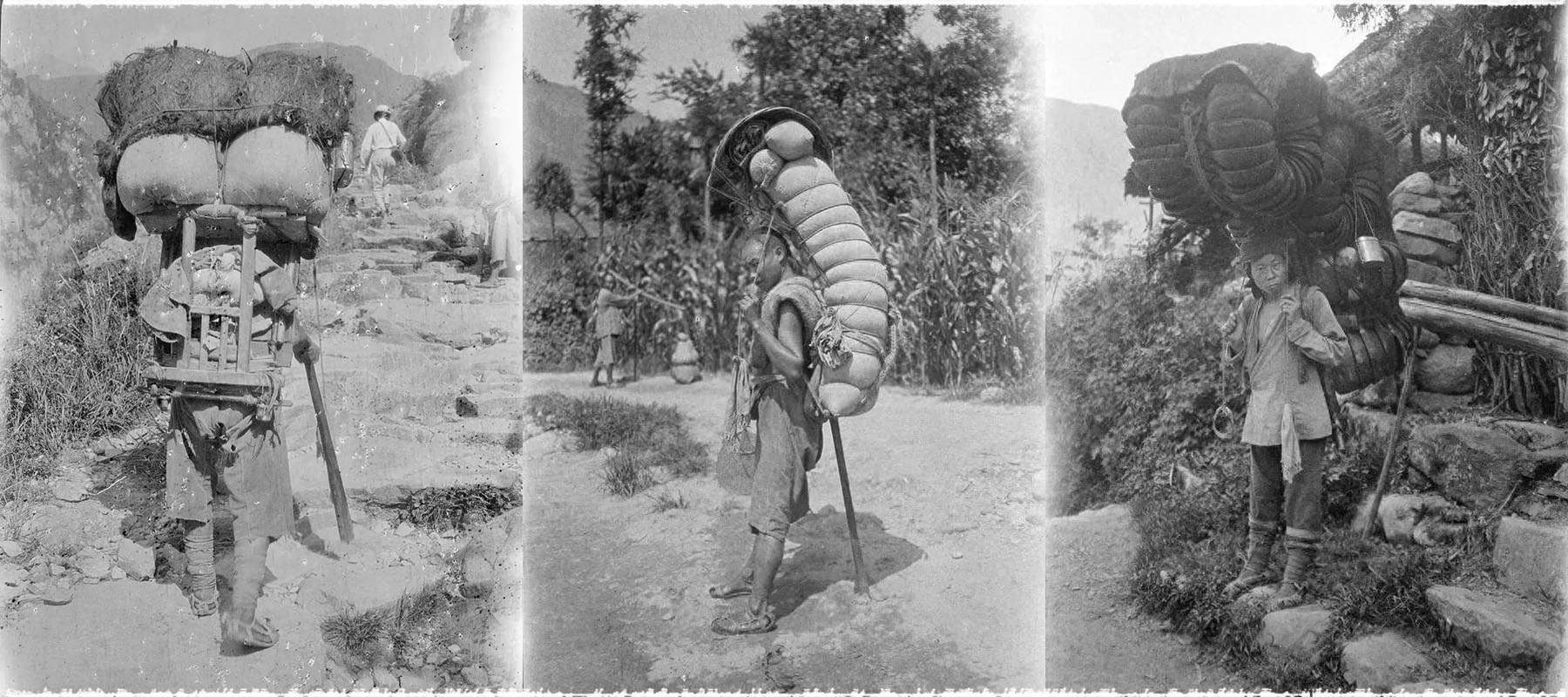
The history of Pu-erh tea is written in the hoofprints of the Ancient Tea Horse Road (Cha Ma Gu Dao).
From the Tang dynasty’s tea-for-horse trade to the Qing dynasty, Pu’er Prefecture became a center for tribute tea. Caravans of mules and horses crossed dangerous Himalayan passes. They exchanged Yunnan tea for Tibetan horses.
It was during these months-long journeys that the soul of Pu-erh tea was accidentally born.
Sun-dried tea leaves, exposed to humid mountain air and the warmth of pack animals, began to ferment slowly and naturally. By the time the tea reached its destination, it had transformed from sharp green leaves into a mellow, deep, and complex infusion.
This “accidental” post-fermentation process was improved during the Republican period. It eventually became the technique we now call wo dui (wet piling).
Why the “Cake” Shape? The Art of Compression
For many people encountering Pu-erh tea for the first time, its compressed forms often spark curiosity:
Why cakes, bricks, or bowl-shaped tuo instead of loose leaves?
The answer lies on the backs of pack animals along the Ancient Tea Horse Road.
Loose-leaf tea is bulky and difficult to transport over long distances. Once compressed into cakes, the process reduces its volume by almost two-thirds while keeping the same weight. This dramatically improves transportation efficiency for tea caravans.
Standardized packaging made things easier. There were seven cakes in a tong and twelve tongs in a basket. This system helped with counting, trading, and taxation.
Therefore, compressed tea became the iconic form of Pu-erh, a tradition that has endured to this day.
| Shape | Name | Features & Uses | Image |
|---|---|---|---|
| Round Cake | Bing Cha (Cake) | Standard seven-piece cake, 357g each, convenient for storage and aging, classic form | 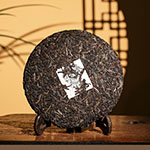 |
| Brick | Zhuan Cha (Brick) | Dense and rectangular, historically supplied to border regions, durable for transport | 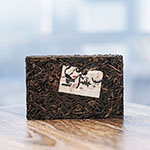 |
| Bowl | Tuo Cha (Bowl) | Concave shape, good ventilation, historically easy to hang on pack animals | 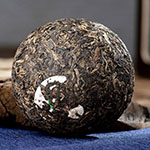 |
| Melon | Jin Guā (Melon) | Pumpkin-shape, used as tribute tea, symbolizes good fortune |  |
Biology: “Living Tea” in a Micro-Environment
Beyond practicality, compression plays a deeper role: it creates ideal conditions for post-fermentation.
When tea leaves are compressed, their cell walls break a little. This lets compounds in the leaves escape. These compounds adhere to leaf surfaces, forming a thin “tea essence film.”
This film works with tiny airborne organisms, such as Aspergillus niger and yeasts. It creates a stable, low-oxygen environment with the right temperature and humidity inside the tea cake.
Compared with loose-leaf tea, compressed Pu-erh:
Oxidizes more slowly: the core remains in a semi-anaerobic state, allowing fermentation to proceed gently and continuously.
Develops more concentrated aromas: the binding tea essence reduces the loss of volatile compounds.
Ages more evenly: pressure brings leaves into close contact, enabling microbial metabolites to circulate throughout the cake.
Therefore, compression is not merely a form; it is an essential part of Pu-erh’s transformation and longevity.
Sheng vs. Shou Pu-erh: Key Differences
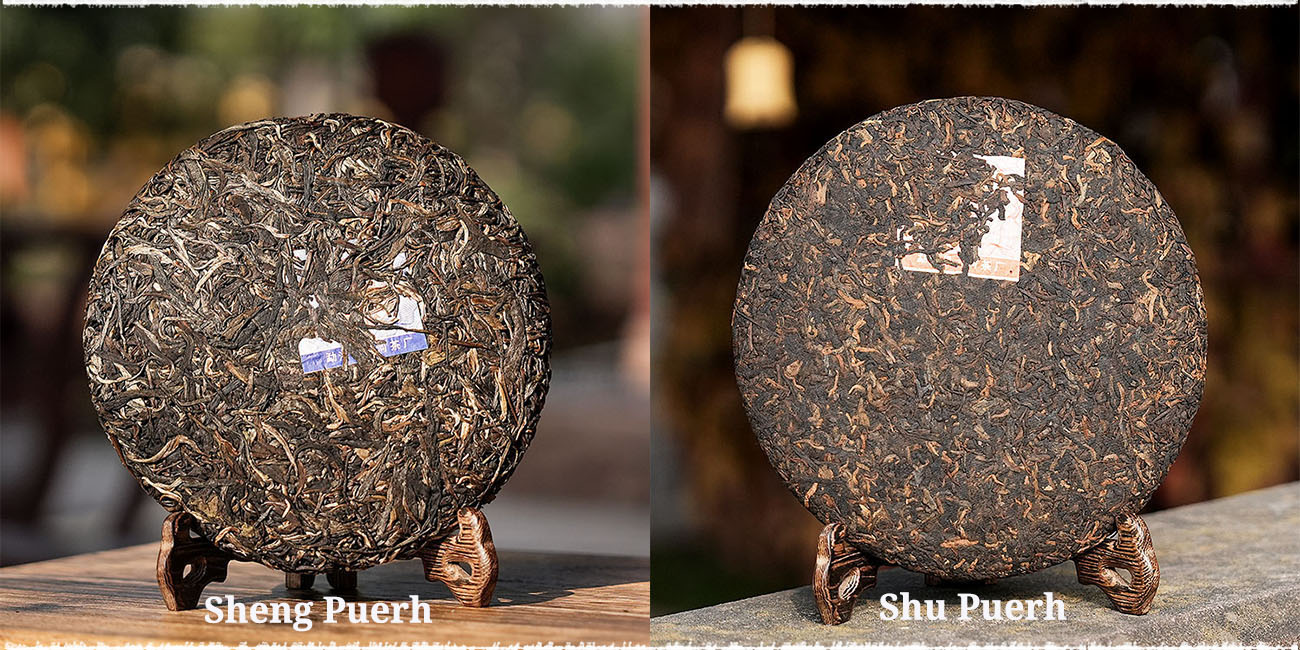
The main difference between Sheng (raw) and Shou (ripe) Pu-erh tea is the fermentation process. Sheng does not undergo wo dui (wet-piling) fermentation, while Shou does.
Tea makers do not use artificial methods to ferment Sheng Pu-erh. Instead, they let it age naturally.
Shou Pu-erh, on the other hand, goes through a special wet-piling fermentation. This process quickly softens the tea and changes its flavor.
This distinction leads to essential differences in flavor, tea nature, color, and leaf appearance.
Sheng Pu-erh (Raw Pu-erh)
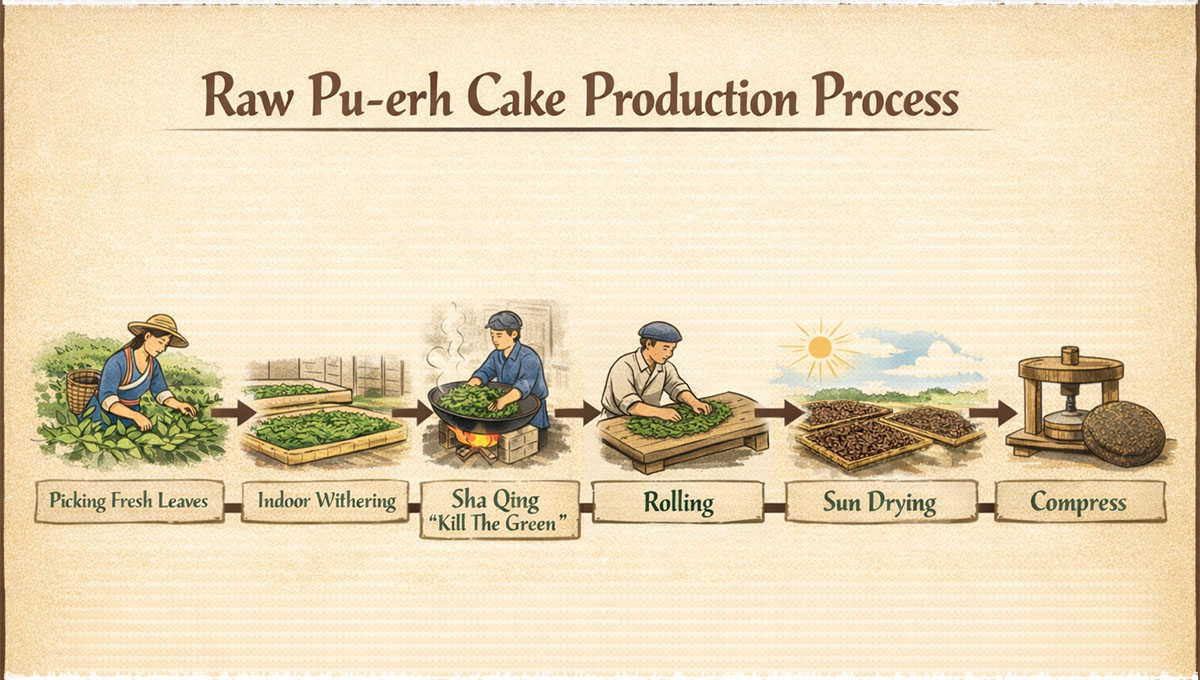
Sheng Pu-erh represents the most original expression of Pu-erh tea. After harvesting, fresh leaves are pan-fired and rolled. They are then sun-dried and compressed into cakes, which starts a long process of natural aging.
Process essence: No artificial fermentation; transformation depends entirely on time and environment.
Flavor profile: Young leaves are dark green. The liquor is bright yellow-green. It has strong floral and fruity smells, along with a wild mountain character. The taste begins with a slight astringency, followed by a powerful returning sweetness and a long-lasting throat feel.
Aging potential: Like fine vintage wine, you can store Sheng Pu-erh for decades under suitable temperature and humidity. As time goes on, its smell changes from fresh to hints of honey, herbs, and camphor wood. Its value increases as it ages.
Ideal for: Tea drinkers who enjoy complexity and transformation, and collectors who appreciate long-term aging.
Shou Pu-erh (Ripe Pu-erh)
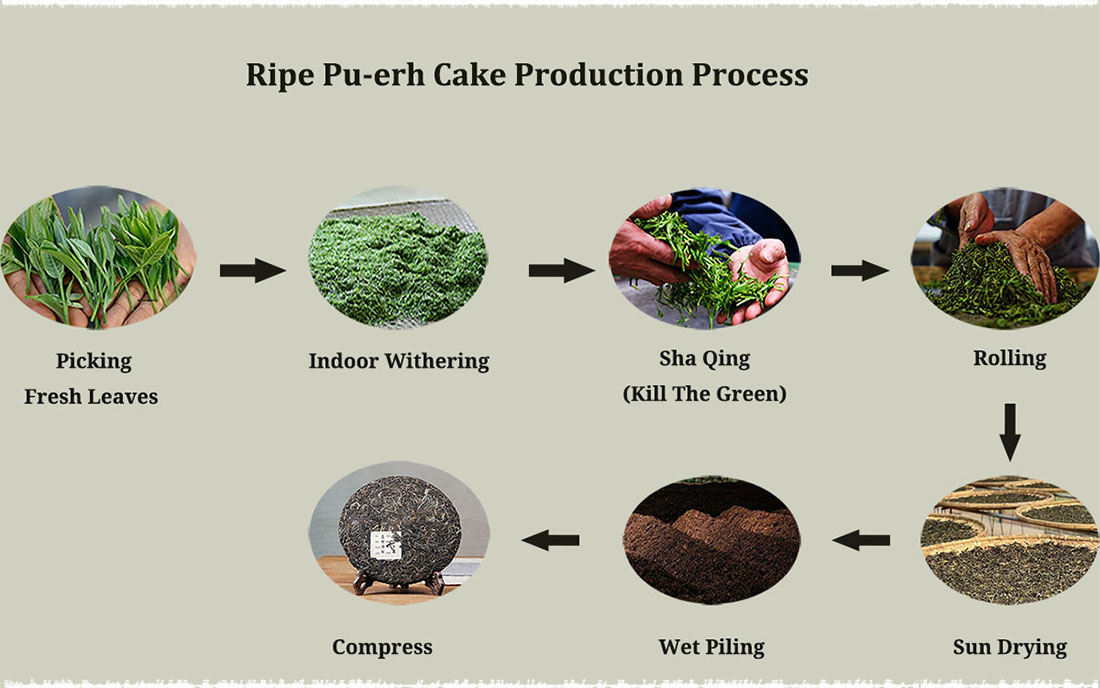
In 1973, tea producers created Shou Pu-erh. This method aims to meet the demand for tea that people can enjoy right away. In the wo dui process, sun-dried Mao Cha is moistened and stacked in a humid place. This helps natural microorganisms speed up fermentation over 60-70 days.
Process essence: Controlled temperature and humidity simulate the effects of years of natural aging.
Flavor profile: The leaves turn reddish-brown, and the liquor deepens to deep red, reminiscent of amber. You can smell wood, dates, and aged notes. The taste is smooth, rich, and mellow. There is almost no astringency, and it has a gentle tea flavor.
Ready to enjoy: Drinkable right after production, without the need for long waiting.
Ideal for: Those with sensitive stomachs, lovers of smooth and warming flavors, and everyday tea drinkers.
Tips: For a deeper understanding of the differences between Sheng and Shou Pu-erh, please refer to our detailed guide here.
Flavor Profile of Cha Puer
One of the most persistent myths about Cha Puer is that it should taste “musty” or “old.”
Instead, it offers a clean, sophisticated spectrum of flavors that evolve with every steep.
Sheng Pu-erh (Raw Pu-erh)
Made from fresh tea leaves that are pan-fired, rolled, and sun-dried, Sheng Pu-erh undergoes no artificial fermentation. When young, it is dominated by fresh, orchid, and honey-like aromas.
The taste is bright and refreshing, with a light, quickly dissolving bitterness and astringency. Returning sweetness and salivation emerge rapidly and distinctly, while the throat feels calm and clear. The liquor is luminous yellow, with a vibrant, layered character full of vitality.
As it ages, its smell changes to hints of camphor wood and herbal medicine. The taste also becomes smoother and gentler.
Shou Pu-erh (Ripe Pu-erh)
Shou Pu-erh was made from raw Pu-erh maocha using an artificial wet-piling fermentation process. Its core aromas include aged notes, glutinous sweetness, and dried date nuances. Free from bitterness and astringency, it enters the palate with a soft, silky texture.
The liquor is thick and velvety, reminiscent of rice soup, with a warm, mellow sweetness. The returning sweetness is gentle and gradual; the throat feels warm and soothing; and the liquor ranges from deep red to reddish-brown. Overall, it is rich, rounded, and comforting, with a mellow character that never feels harsh.
Note: Earthy vs. Musty. Authentic Shu Puer should smell like “earth after rain” – clean, grounding, and organic. If a tea tastes sour, moldy, or dusty, it is a sign of poor processing or storage, not a characteristic of the tea itself.
Health Benefits of Pu-erh Tea
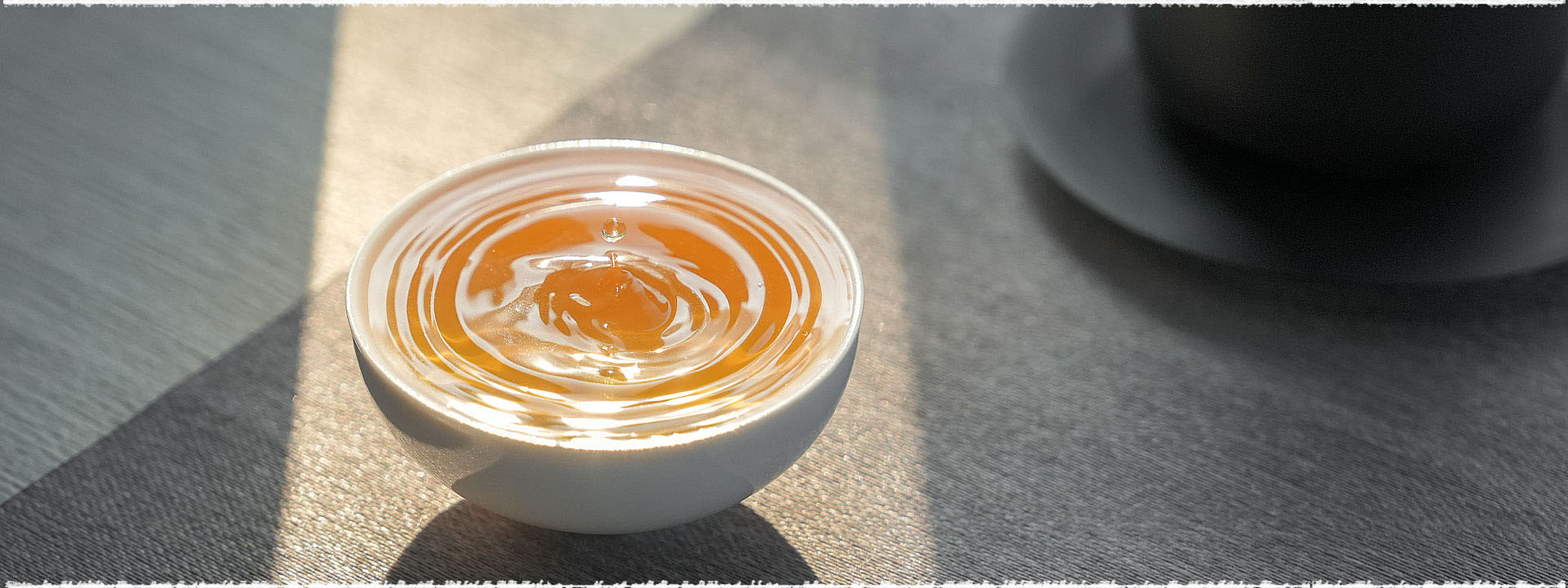
Gut Health & Probiotics: Supporting Digestion
One of the most recognized benefits of Pu-erh tea lies in its support for digestive health.
Shou Pu-erh is a type of fermented tea. It goes through a special wet-piling fermentation process. This process helps create helpful microorganisms and probiotic-like compounds.
These components help stimulate digestion and support gut function, easing symptoms such as bloating and indigestion. Known for its mild and gentle nature, Ripe Pu-erh is significantly easier on the stomach than green tea, which can be more stimulating. Drinking in moderation keeps your stomach comfortable. It is a good choice for those who enjoy rich foods or have sensitive stomachs.
However, Sheng Pu-erh has a cooler nature. New Sheng Pu-erh can be more stimulating for sensitive stomachs. So, aged Sheng Pu-erh is often better for those with digestive issues.
Metabolism & Weight Management: Supporting Lipid Metabolism
Pu-erh tea is sometimes described as a natural “fat blocker.” Compounds such as theabrownins, along with tea polyphenols and polysaccharides, may help regulate lipid metabolism by reducing fat absorption and promoting metabolic processes.
Regular consumption in moderation may help maintain healthy cholesterol and triglyceride levels, supporting weight management and metabolic balance. Drinking Pu-erh tea after meals has long been a traditional habit, believed to aid digestion and metabolic function.
However, it is essential to see Pu-erh tea as a helpful part of your diet. It should not replace balanced nutrition and exercise.
Heart Health & Antioxidant Power: Combating Oxidative Stress
Research shows that Pu-erh tea has special antioxidants. These compounds support heart health by helping maintain healthy cholesterol levels. They can especially lower LDL, which is known as “bad” cholesterol.
Tea polyphenols are potent antioxidants that help neutralize free radicals and reduce oxidative stress on cells. This may help slow cellular aging, support skin health, and strengthen immune function.
Sheng Pu-erh is made from tender leaves. It is rich in natural polyphenols, such as EGCG (epigallocatechin gallate). These compounds may boost antioxidant activity and support immune and cellular health.
Refreshing the Body and Relieving Fatigue
With its cooler nature, Sheng Pu-erh is rich in vitamins and minerals. People often enjoy it in warmer seasons to help refresh the body and relieve sensations of heat, thirst, and fatigue.
The caffeine and theanine in Pu-erh tea gently stimulate the nervous system, boosting alertness and mental clarity while reducing fatigue. When enjoyed in moderation, it serves as a refreshing companion for professionals or late-night workers, restoring focus and energy without excessive stimulation.
Tips: For a deeper understanding of the health benefits about Pu-erh, please refer to our detailed guide here.
Caffeine Content in Pu-erh Tea
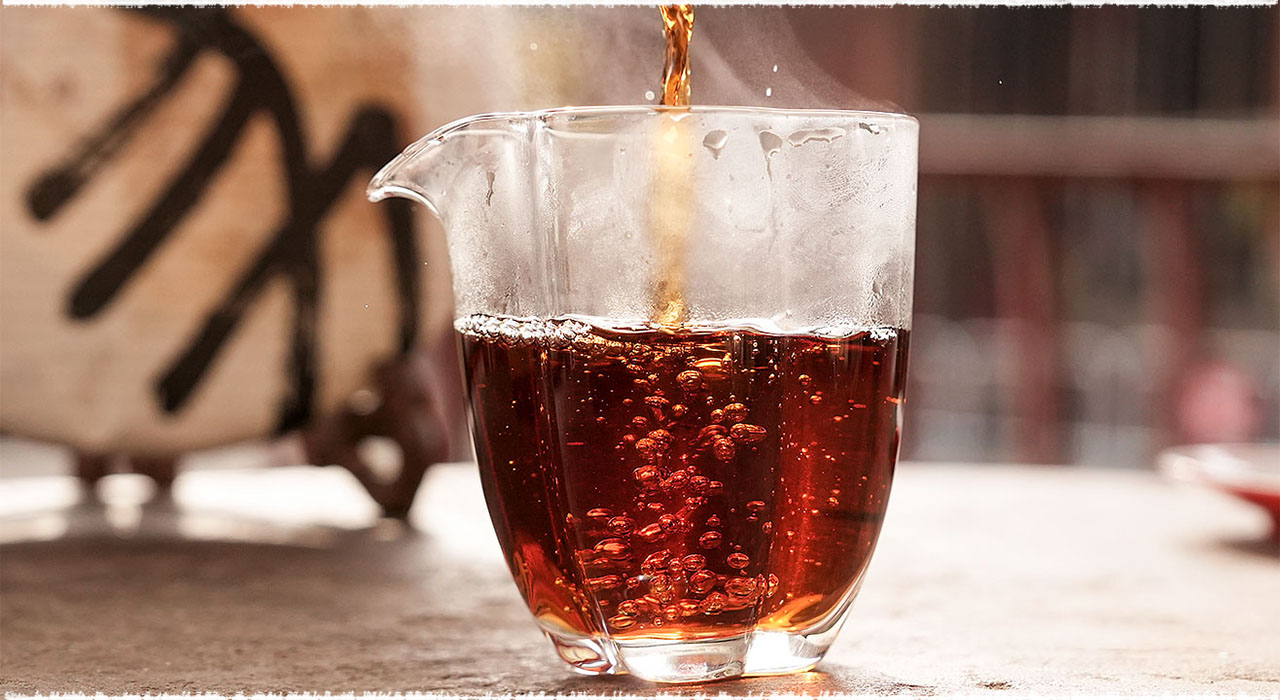
Many tea lovers wonder whether Pu-erh tea (Cha Puer) contains a high level of caffeine and whether it may affect sleep. In fact, Pu-erh tea generally has a moderate caffeine content.
Caffeine levels can vary depending on the type of tea, its processing, and aging. Overall, Pu-erh tea generally contains less caffeine than coffee and is often comparable to or slightly lower than black tea. When consumed in moderation, it usually does not cause noticeable effects in most people.
More specifically, Sheng Pu-erh (Raw Pu-erh) typically contains slightly more caffeine than Shou Pu-erh (Ripe Pu-erh). Newly produced Sheng Pu-erh contains approximately 60–110 mg of caffeine per 8 oz (240 ml) of brewed tea.
During fermentation, part of the caffeine in Shou Pu-erh is reduced, resulting in a range of about 30–90 mg per 8 oz (240 ml).
As Pu-erh tea ages, its caffeine content usually decreases. At the same time, its taste becomes gentler and smoother.
If you care about sleep quality, avoid drinking Pu-erh tea 3 to 4 hours before bed. This is especially true for young Sheng Pu-erh.
If you like tea in the evening, well-aged Shou Pu-erh might be a better choice. Its smooth taste makes it easy to enjoy in moderation. This can create a more relaxing tea experience.
Drinking Suggestions
Morning: Sheng Pu-erh
Fresh Sheng Pu-erh gives you caffeine quickly. Theanine balances this effect, making it a refreshing choice. It helps you start your day with clarity and focus.
Evening: Shou Pu-erh
Due to its fermentation process, Shou Pu-erh tends to release caffeine more gradually. Its calm, soft nature makes it suitable for light evening tasks or relaxing moments. It provides mild stimulation without being too intense.
Brewing and Storage Tips for Cha Puer

1. Preparing the Tea
For each brew, we recommend using approximately 8 g of Sheng Pu-erh, 10 g of Shou Pu-erh, and 110 ml of water in a Gaiwan.
If using a compressed tea cake, gently loosen the leaves with a tea pick along the natural layers. Try to keep the leaves as intact as possible, as excessively broken leaves may result in a more bitter infusion.
Place the tea leaves into a gaiwan or a Yixing clay teapot.
2. Rinsing the Tea
Pour boiling water over the tea leaves and quickly discard the infusion.
This step “wakes up” the leaves, removes dust from the surface, and ensures cleaner, better-flavored infusions in the subsequent infusions. It prepares the tea to fully release its complex aromas and nutrients as you begin brewing.
3. Brewing Method
Sheng Pu-erh (Raw Pu-erh):
Use a “quick in, quick out” approach. Start with an initial steeping time of about 5–8 seconds to avoid excessive bitterness and astringency.
Shou Pu-erh (Ripe Pu-erh):
A slightly longer steeping time of 10–15 seconds is recommended to extract its deep woody and date-like aromas.
As the number of infusions increases, extend the steeping time by 5–10 seconds each round.
High-quality Pu-erh tea can be brewed consistently for 15 infusions or more.
4. Water Temperature
For Sheng Pu-erh, a water temperature of around 95°C (203°F) is recommended.
For Shou Pu-erh, use 100°C (212°F) water.
Hotter temperatures help release the tea’s aromas and compounds. It leads to a richer flavor and a more fragrant drink.
Storage Tips for Pu-erh Tea (Cha Puer)
The key principles for storing Pu-erh tea are dryness, ventilation, coolness, and freedom from odors.
Keep away from humidity, direct sunlight, and high heat. These conditions can lead to mold growth, damage, and a loss of flavor and value.
1. Choosing the Right Container
We recommended storing Pu-erh tea in Yixing clay jars, ceramic containers, or cardboard boxes. These materials are breathable, allowing the tea to age naturally.
Avoid glass and plastic containers. Glass jars allow light exposure, which can accelerate deterioration, while plastic containers may release odors that contaminate the tea.
2. Storage Environment
The storage area should be dry, well-ventilated, and cool.
Ideally, maintain a temperature between 20–30°C (68–86°F) and humidity between 50–70%.
Do not store Pu-erh tea in kitchens, bathrooms, or balconies. Kitchens can have strong food smells. Bathrooms can be very humid. Balconies can get a lot of direct sunlight.
3. Practical Notes
Different types and vintages of Pu-erh tea should be stored separately to prevent aroma cross-contamination.
Avoid frequent handling or turning of the tea during storage; let it age naturally.
How to Choose Pu-erh Tea: A Beginner’s Guide
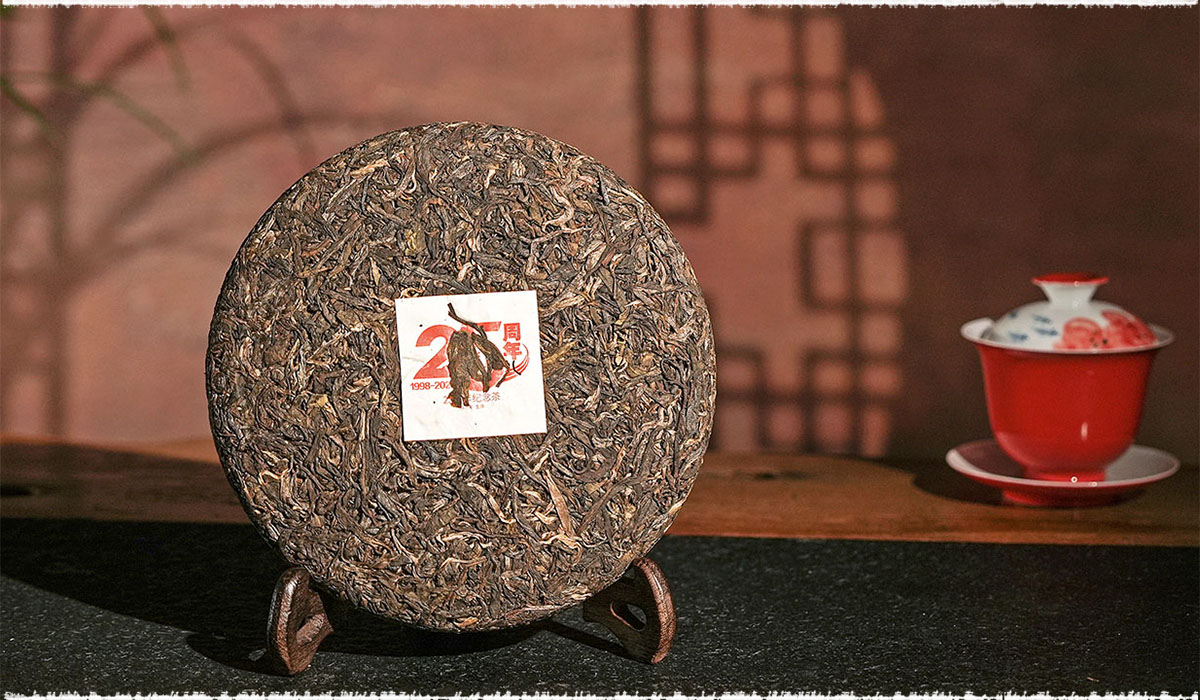
Pu-erh tea comes in a wide range of styles, with Sheng (Raw) and Shou (Ripe) Pu-erh each offering distinct characteristics. Beginners do not need to try everything unthinkingly. To find the proper Pu-erh tea for you, consider three things: your personal needs, flavor preferences, and drinking occasions.
1. Based on Drinking Needs
If you want a tea for daily use, have a sensitive stomach, or like a mild taste, Shou Pu-erh is an excellent option. It is gentle, mellow, and ready to drink after brewing.
If you like layered flavors, enjoy the aging process, or want to collect tea, Sheng Pu-erh might be a good choice. Young Sheng is fresh and vibrant, while aged Sheng becomes deeper and smoother over time.
2. Based on Flavor Preferences
If you like fresh flavors that are sweet and a bit bitter, pick a young Sheng Pu-erh aged for 1 to 3 years.
If you prefer a rich, smooth taste with little to no bitterness, choose Shou Pu-erh.
If you want a balance between freshness and gentleness, try Sheng Pu-erh aged for more than five years.
3. Based on Drinking Occasions
Office workers can enjoy Sheng Pu-erh in the morning for clarity and energy. Shou Pu-erh is better for the afternoon or evening.
In summer, Sheng Pu-erh gives a refreshing drink. In winter, Shou Pu-erh offers a warm and comforting cup.
Tea collectors often prefer high-quality Sheng Pu-erh made from Yunnan large-leaf tea trees. This type of tea usually develops more complexity when stored properly.
Our Recommendation:Given the diversity of Pu-erh tea styles, the most reliable way to start is with a Pu-erh sampler set. Different tea-growing regions in Yunnan, such as Bulang and Yiwu, produce Pu-erh teas with unique flavors. Trying small portions first helps you find what you like, allowing you to explore Pu-erh with confidence without committing to a whole 357g tea cake.
Among the many categories of Chinese tea, Pu-erh tea occupies a unique and prestigious position. It is a unique type of post-fermented tea, and also a protected treasure with a history of over 2,000 years.
Authentic Pu-erh tea is produced exclusively in Yunnan Province, China. The Yunnan large-leaf tea trees and unique soil create a special wild mountain flavor. This tea also has excellent aging potential.
Historically, Pu-erh tea was an essential product on the Ancient Tea Horse Road. Its famous compressed forms, such as cakes and bricks, reveal ancient knowledge of transportation. They also reflect the optimal conditions for post-fermentation of this “living tea.”

























