 Why Isn't Jasmine Black Tea as Fragrant as Jasmine Green Tea?
 Differences Among Wu Niu Zao, Longjing 43, and Qun Ti Zhong
 How Brewing Alishan Oolong Tea Differs in Zi Ni, Zhu Ni, and Duan Ni Yixing Teapots






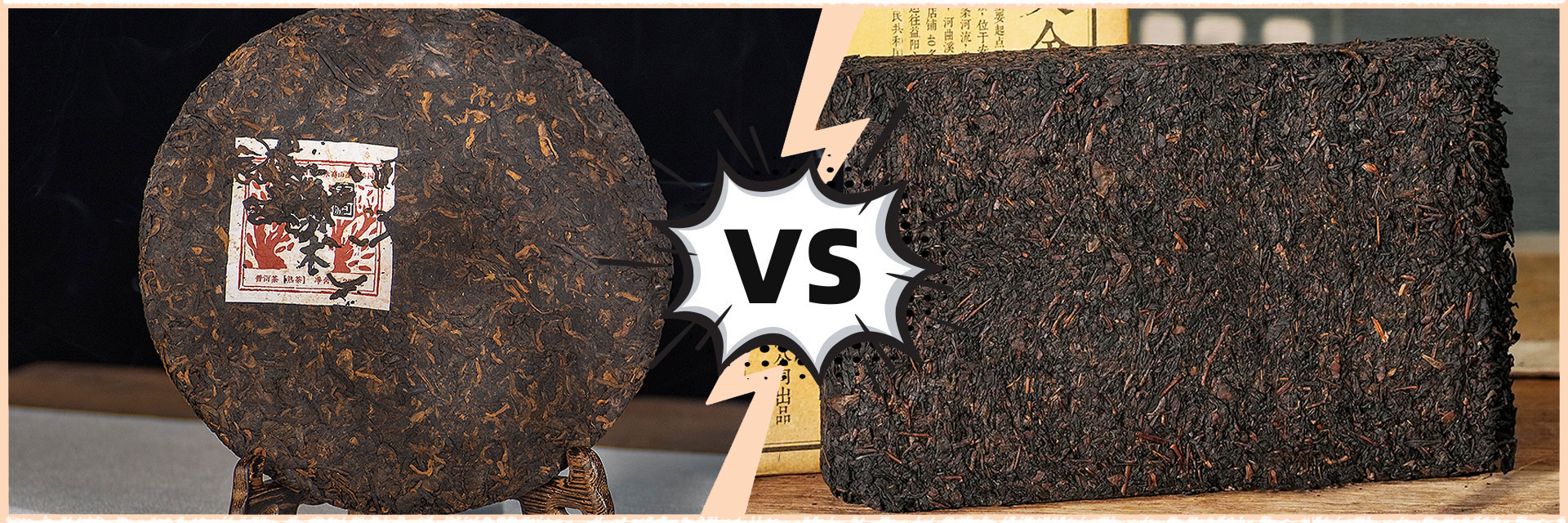
First, let’s clarify what dark tea (hei cha) actually is. It does not refer to a single specific tea, but rather one of China’s six major tea categories, alongside green tea, black tea, oolong tea, white tea, and yellow tea. The defining characteristic of dark tea is post-fermentation involving microorganisms. In other words, after the initial processing is completed, the tea continues to undergo microbial transformation through processes such as piling fermentation, fungal growth, and aging. This results in a darker liquor color and a fuller, more mellow mouthfeel.
Now let’s talk about Pu-erh tea. Pu-erh is generally divided into raw (sheng) Pu-erh and ripe (shou) Pu-erh. Ripe Pu-erh undergoes artificial piling fermentation (wo dui). After fermentation, the tea liquor turns deep red and the texture becomes rich, smooth, and mellow. This is why ripe Pu-erh is classified as dark tea. Raw Pu-erh, on the other hand, does not go through the piling fermentation process, so it is not considered dark tea.
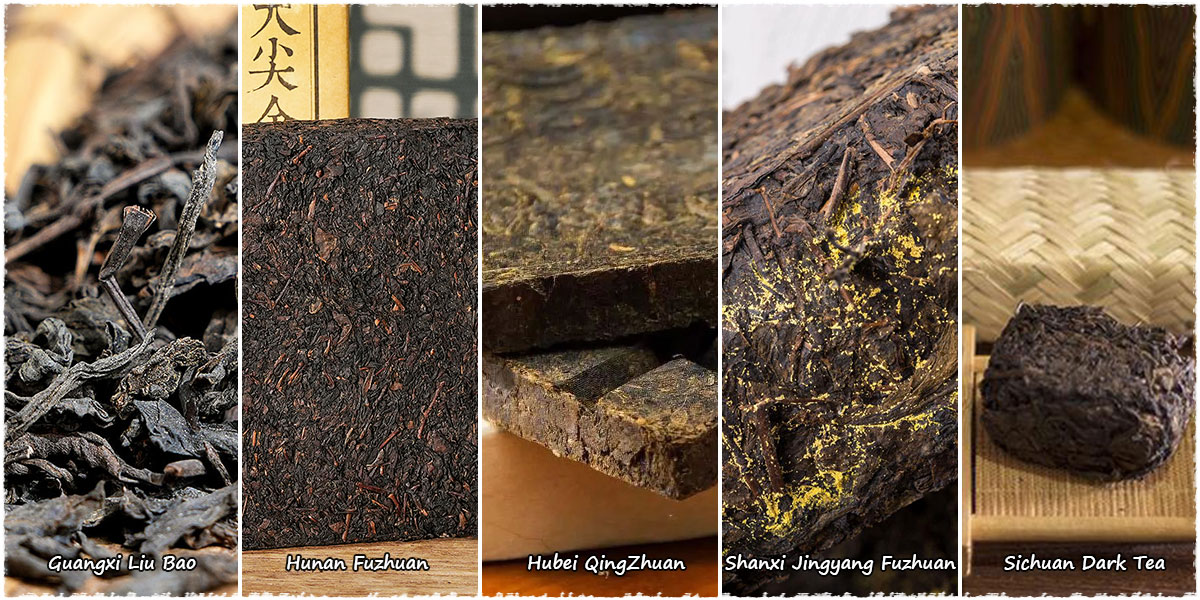
With these basic concepts clear, let’s return to dark tea itself. Since dark tea is a broad category, it naturally includes more than just ripe Pu-erh. Many of these teas may already sound familiar: Guangxi Liu Bao tea, Hunan Anhua dark tea, Hubei dark tea, Sichuan dark tea, and Shanxi dark tea. They all belong to the dark tea category, but they are not Pu-erh tea. At this point, you might wonder: if ripe Pu-erh and other dark teas all belong to the same category, what exactly differentiates them?
1.Different Tea Cultivars
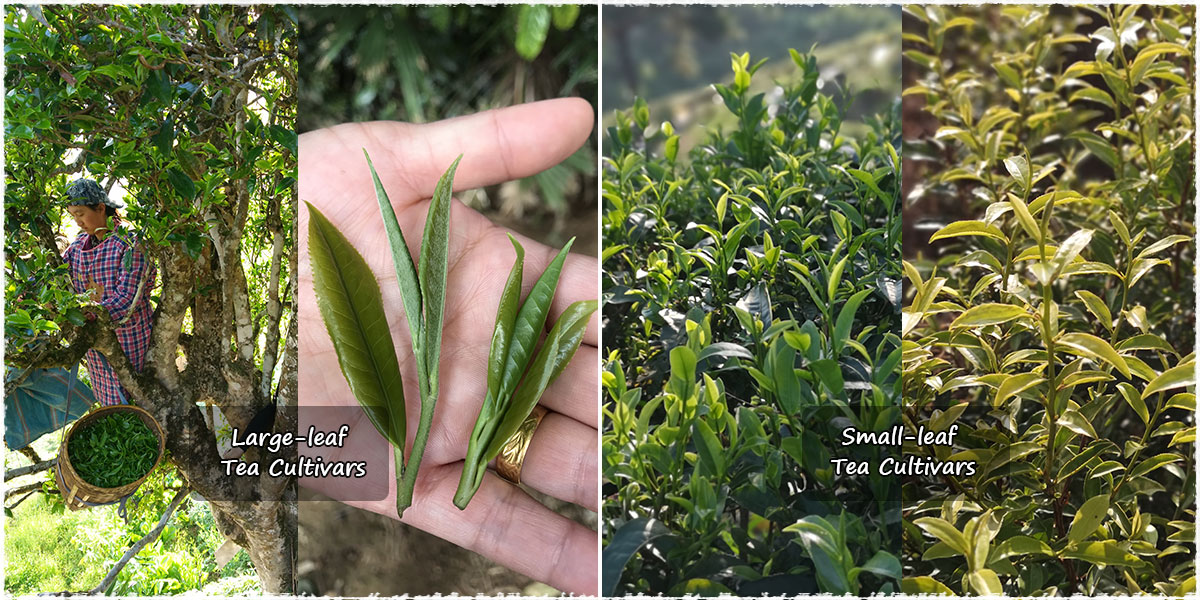
Ripe Pu-erh is primarily made from Yunnan large-leaf tea cultivars. Large leaves are thick and rich in internal compounds, including tea polyphenols, amino acids, and soluble substances. This allows the tea to withstand high-intensity piling fermentation while still retaining body, structure, and depth, and also provides the material foundation for long-term aging. In contrast, Liu Bao tea and Anhua dark tea are mostly made from small-leaf tea cultivars. These leaves are thinner and more delicate, producing a gentler and softer liquor structure. This makes them well-suited to a milder, more stable style. While they can still ferment, their internal composition tends to result in teas that stabilize relatively early rather than continuing dramatic transformation over long periods.
2.Different Fermentation Methods
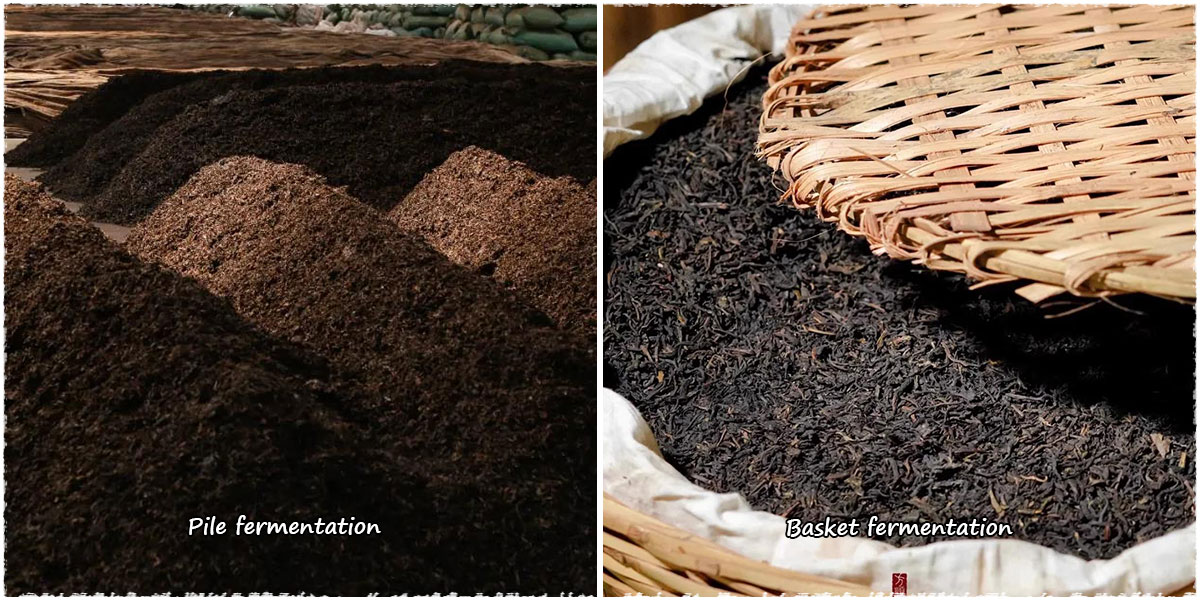
Although microbial activity plays a role in all dark teas, the timing and methods of fermentation differ. For ripe Pu-erh, fresh leaves are first processed into sun-dried maocha, a relatively complete primary form, before entering the piling fermentation stage. By carefully controlling temperature, humidity, and microbial conditions, the transformation process is significantly accelerated.
Liu Bao tea and Anhua dark tea follow a different path. After kill-green (sha qing), the leaves are piled or basket-fermented directly. Fermentation enters the process earlier and tends to be slower and more gradual.
In terms of flavor, ripe Pu-erh often shows earthy, woody, and ripe fruit notes, while Liu Bao and Anhua dark teas lean more toward grain aromas, medicinal notes, and warm, gentle woodiness.
3.Different Aging and Post-Production Transformation
Even after production is complete, ripe Pu-erh continues to undergo slow transformation. Under suitable storage conditions, the liquor becomes progressively cleaner, smoother, and sweeter, while the aroma integrates and deepens over time. For this reason, ripe Pu-erh has clear aging potential and collectible value. By comparison, Liu Bao tea and Anhua dark tea are usually relatively stable once finished. Further storage tends to emphasize mellowing and rounding rather than dramatic directional changes in flavor. These teas place greater emphasis on immediate drinkability and consistency, rather than long-term structural evolution.
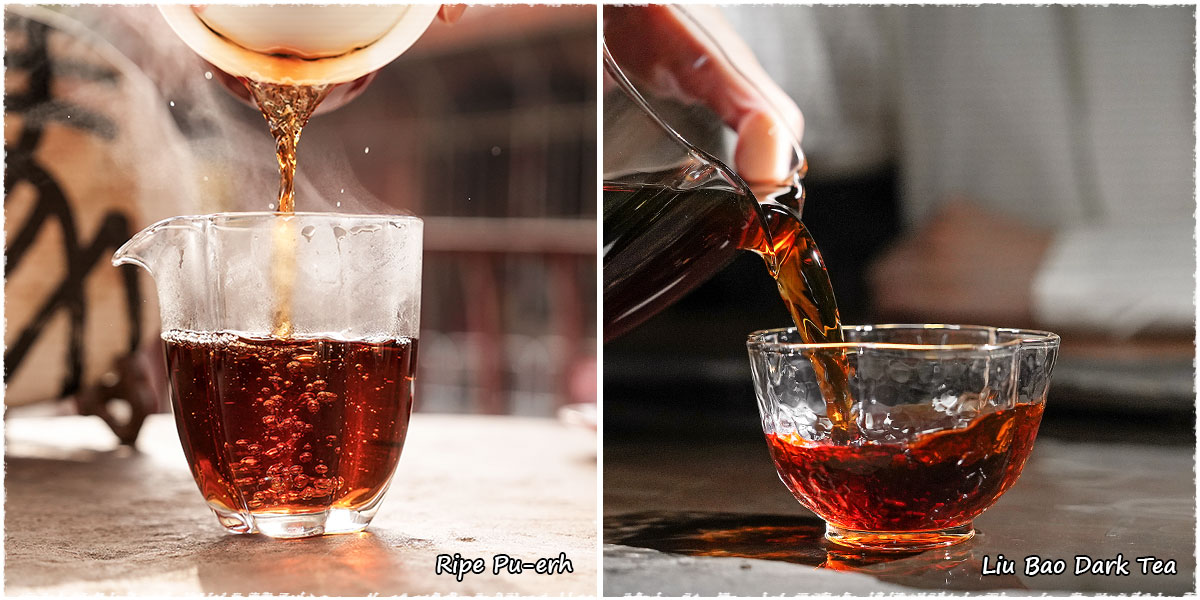
Once we understand these differences, it becomes clear that dark tea is not a single, unified flavor profile, and that ripe Pu-erh is just one expression within the broader dark tea system.
The next time you drink ripe Pu-erh, Liu Bao tea, or Anhua dark tea, pay close attention to their differences: the thickness of the liquor, the direction of the aroma, and how the tea evolves on the palate. All of these details quietly tell you which tea cultivar it comes from, how it was fermented, and what kind of time rhythm it’s best suited for.
With this understanding, choosing and drinking tea is no longer just about whether it tastes “good” or not, but about making a more informed, intentional choice.

























