 Why Isn't Jasmine Black Tea as Fragrant as Jasmine Green Tea?
 Differences Among Wu Niu Zao, Longjing 43, and Qun Ti Zhong
 How Brewing Alishan Oolong Tea Differs in Zi Ni, Zhu Ni, and Duan Ni Yixing Teapots






Jasmine tea is not classified as one of China’s six major tea categories. Instead, it is a reprocessed tea made by scenting a tea base—such as green tea, black tea, white tea and etc. — with fresh jasmine blossoms. Through processes such as blending and repeated scenting, the tea leaves gradually absorb the delicate floral aroma released by the jasmine flowers, creating the tea’s distinctive fragrance.
The scenting process of jasmine tea is essentially a two-way interaction: fresh jasmine blossoms release their fragrance, while the tea leaves absorb it.
The release of fragrance from fresh jasmine flowers is a natural biochemical process. As the blossoms mature, enzymes, temperature, moisture, and oxygen trigger a series of biochemical reactions that produce aromatic compounds. As the flowers gradually open, they continuously emit these volatile fragrance molecules.
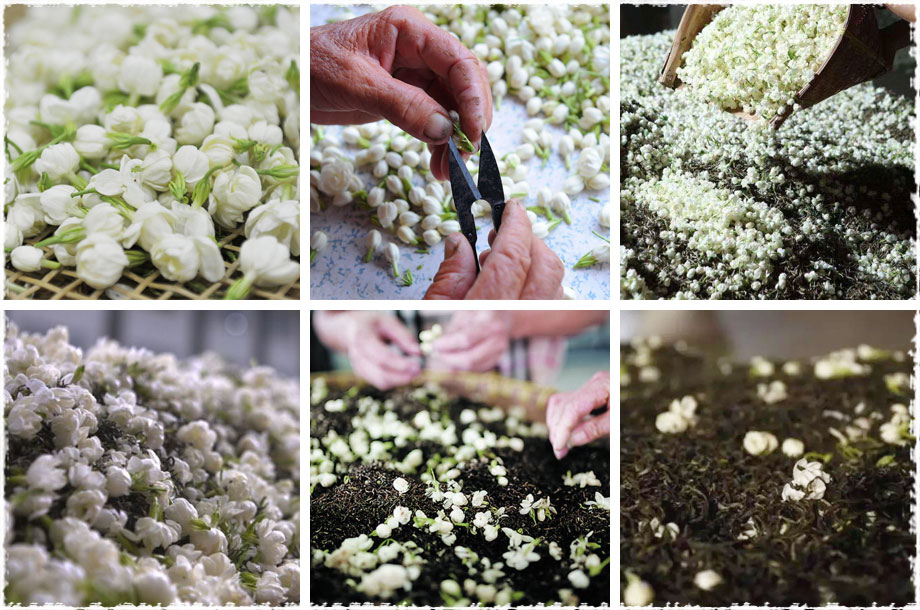
The tea leaves absorb these aromatic compounds primarily through physical adsorption. At the same time, they also take in a significant amount of moisture from the fresh flowers. As water penetrates the tea leaves, chemical adsorption also occurs. Under warm and humid conditions, a series of complex chemical reactions take place, allowing the floral aroma to become more deeply integrated with the tea and creating the distinctive fragrance of jasmine tea.
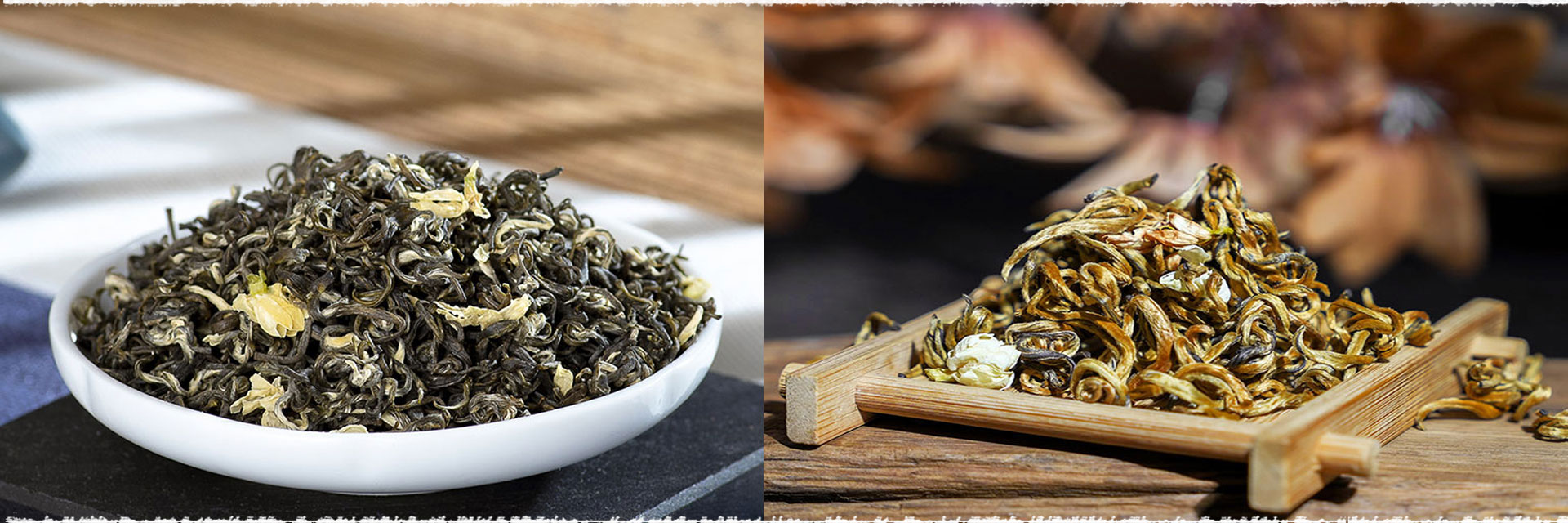
However, regular jasmine tea drinkers may have noticed an interesting phenomenon. Most jasmine teas on the market are made with a green tea base, while jasmine black tea is relatively less common. Even when jasmine black tea is available, its floral aroma often seems less intense and vibrant than that of jasmine green tea.
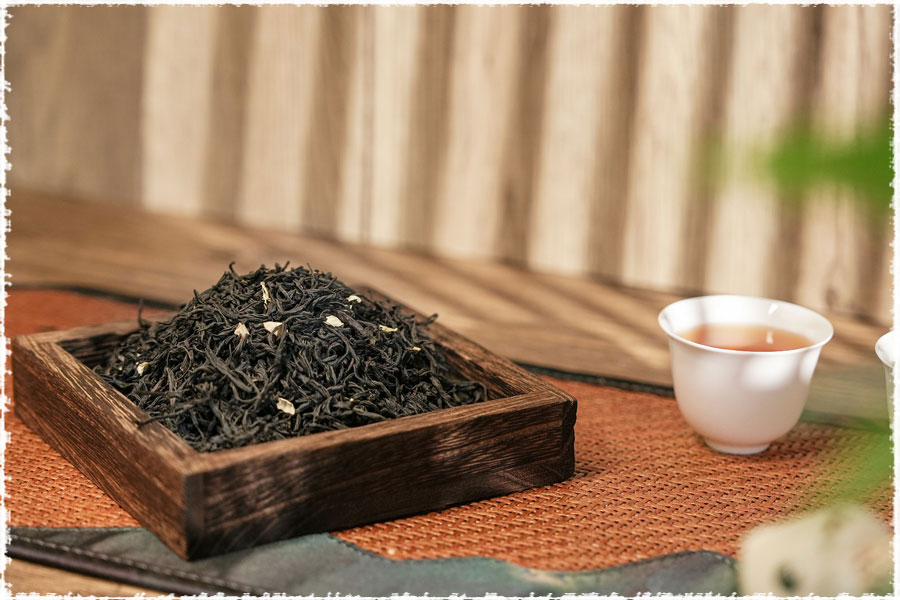
Since both teas are scented with fresh jasmine blossoms, why does a black tea base never seem to capture the fragrance as vividly as a green tea base? The answer lies in two key factors: the tea leaves’ ability to absorb aroma and how well they withstand the repeated scenting process.
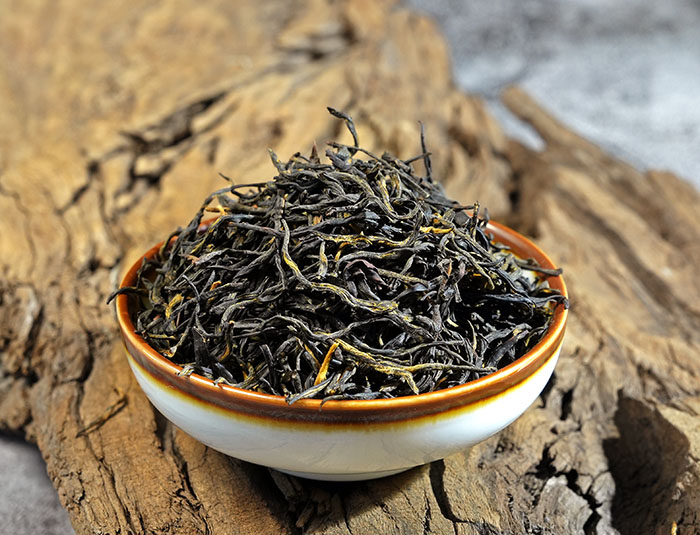
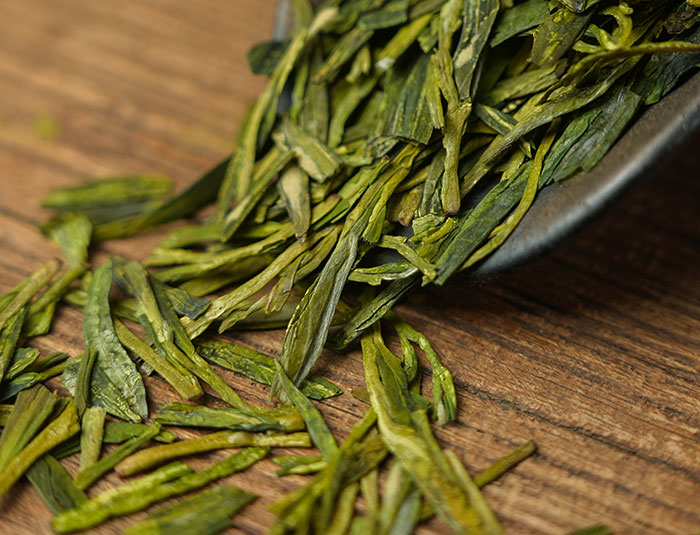
First, the difference lies in the physical structure of the tea base. Green tea undergoes high-temperature kill-green and drying, resulting in a loose, porous cellular structure that resembles a sponge. This structure gives it a remarkable capacity to physically adsorb the volatile aroma compounds released by jasmine flowers during the scenting process. By contrast, black tea undergoes rolling followed by enzymatic oxidation, during which the cell walls are extensively disrupted and cellular sap is released. After drying, the leaves become denser and more compact. In addition, the oxidation and polymerization of polyphenols during enzymatic oxidation generate oxidation products that accumulate within the cell wall matrix, further obstructing the microporous pathways through which aroma compounds diffuse into the leaf tissues. Consequently, black tea is inherently much less capable of absorbing jasmine floral aroma than green tea.
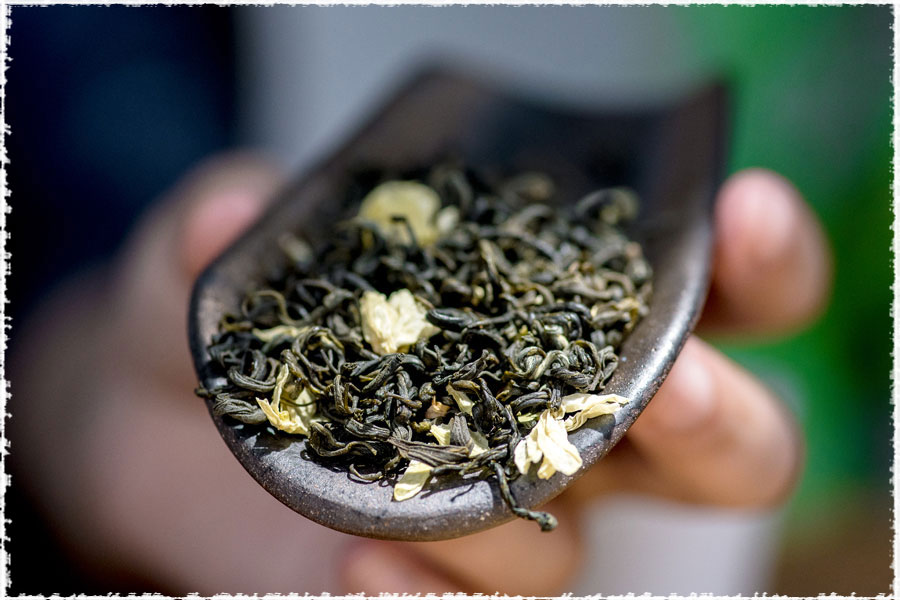
The second factor lies in how differently the two tea bases respond to the temperature and humidity conditions required for scenting. Jasmine flowers give off their fragrance most actively in the range of 30–40°C. Green tea, having been stabilized by high-temperature kill-green, remains chemically steady under these warm, moist conditions and can readily take on the floral notes without any unwanted side reactions. Black tea, however, is a different story. The theaflavins and thearubigins produced during its oxidation process are less stable in a warm, humid environment—they tend to degrade, which can dull the liquor color and give the tea a flat, sourish taste. What’s more, after scenting, the tea base must be re-fired to drive off the moisture it has absorbed. Green tea can withstand multiple rounds of re-firing, each time locking in the floral fragrance more firmly. Black tea, on the other hand, doesn’t take kindly to repeated high-temperature re-firing—too much heat will seriously compromise its signature mellow richness. But if you don’t re-fire it enough, residual moisture lingers, and the aroma ends up feeling heavy and subdued, never quite soaring to its full potential.
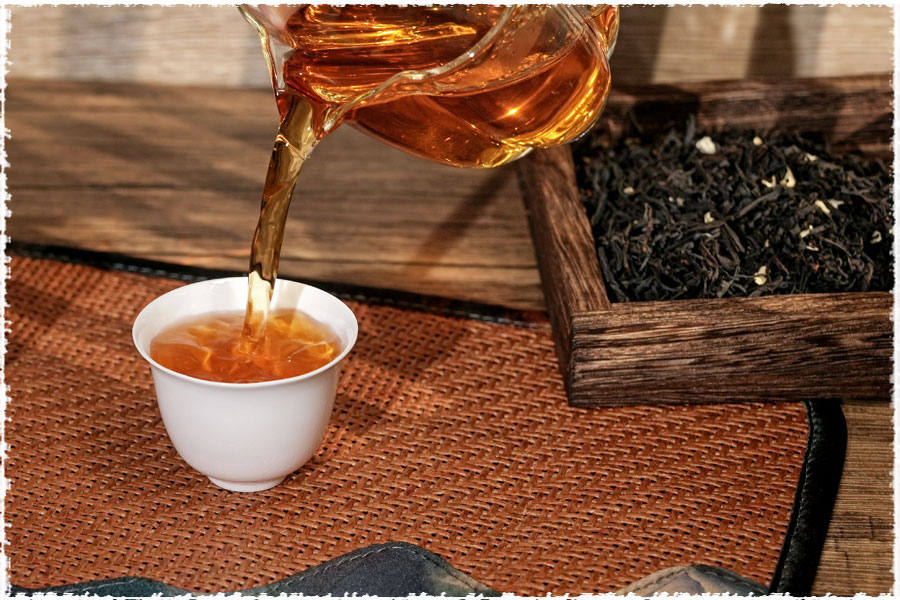
Finally, it comes down to how the tea base’s own aroma interacts with the jasmine fragrance. Green tea naturally has light, clean notes—often chestnut-like or fresh and vegetal—that share the same bright, delicate character as jasmine. As a result, the two aromas complement each other beautifully, allowing the jasmine’s freshness to really shine. Black tea, on the other hand, develops rich fruity and honey-like notes during oxidation, giving it a much deeper, fuller aroma. That richer character naturally softens and masks the lighter jasmine fragrance. The jasmine doesn’t disappear—it simply becomes woven into the tea’s rich, mellow aroma, creating a fragrance that’s more layered and restrained. So jasmine black tea isn’t short on floral aroma; it’s just that the jasmine is “hidden in the cup.” You have to slow down and savor it before that delicate floral note reveals itself in the lingering sweetness of the finish.
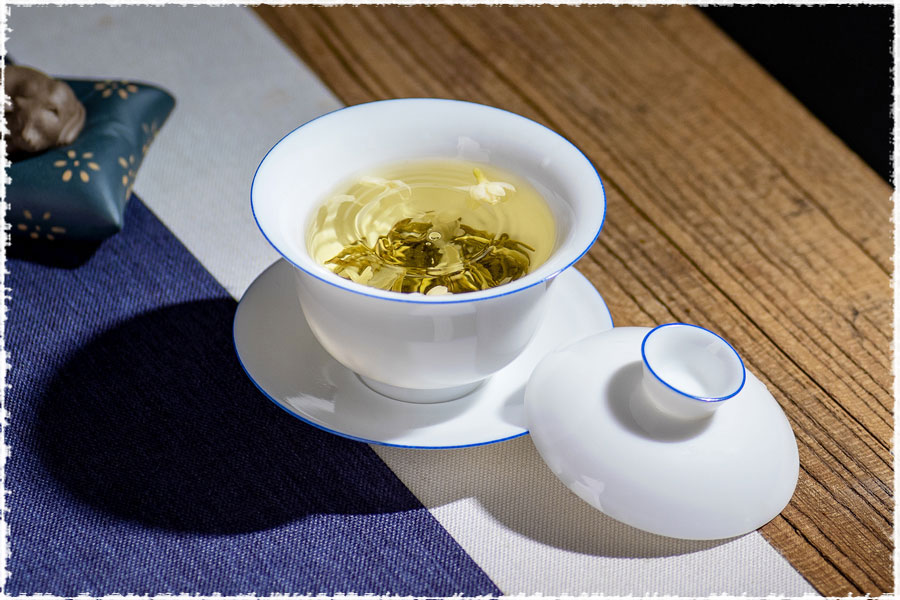
So, why isn’t jasmine black tea as fragrant as jasmine green tea? The answer lies not in quality, but in the differences in the tea base itself—the physical structure of the leaves, their compatibility with the scenting process, and the way their own aromas interact with jasmine. Jasmine green tea may offer a brighter and more pronounced floral fragrance, while jasmine black tea presents a deeper, richer, and more layered aroma. Neither is better than the other; they simply offer different expressions of jasmine. In the end, the best choice is not the one with the strongest aroma, but the one that best suits your own taste.