
-
Fast ShippingFree shipping for orders above $40
to most countries. -
Secure PaymentPay with Paypal, Credit Card …
-
Carefully SelectedFrequently Visit Tea Gardens.
Taste Repetitiously -
15 Days RefundNo Questions Asked
Refund Policy
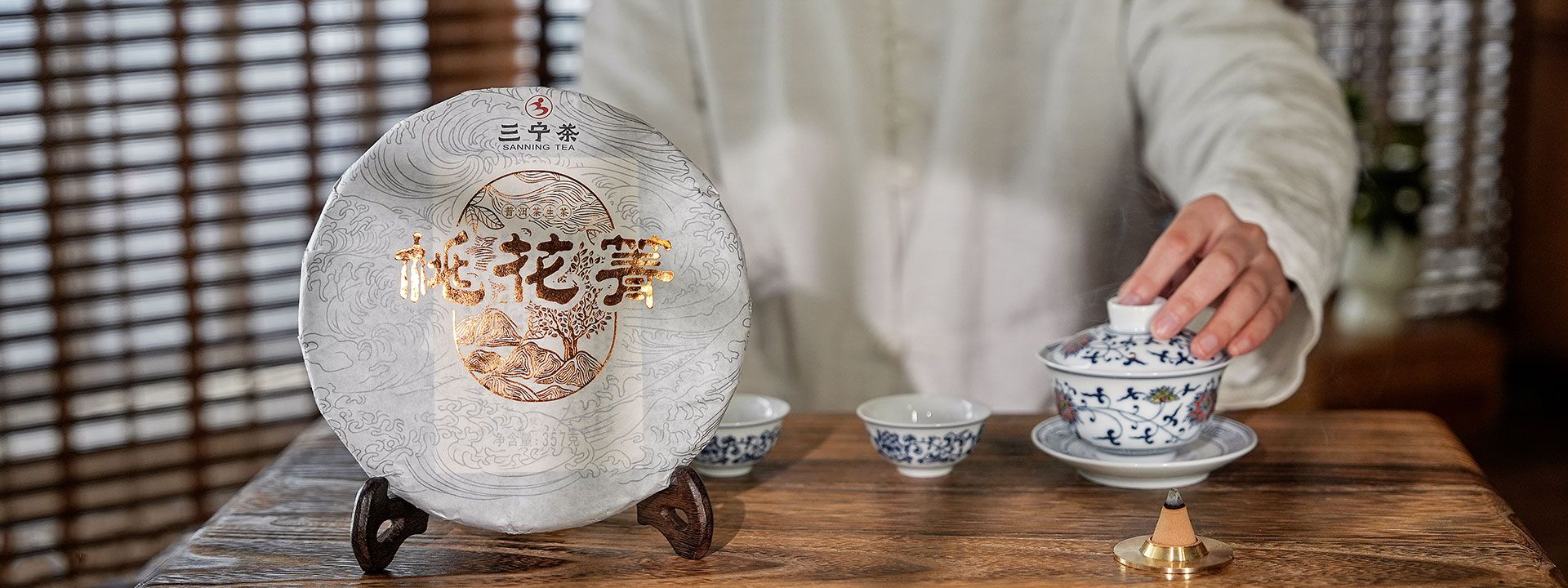
Tao Hua Jing Raw Puerh Cake Tea 2023
Rich and aromatic, daily-drink tea
Price range: $2.00 through $175.92
Tao Hua Jing Raw Puerh Cake Tea 2023
Rich and aromatic, daily-drink tea
Summary
| Origin: |
Taohua Village, Fengqing County, Lincang, Yunnan Province, China |
|---|---|
|
Harvest Date: |
April 20, 2023 |
|
Production Date |
June 22, 2023 |
|
Net Weight: |
357g |
| Dry Leaf: |
Tightly compressed cake shape, with clearly, plump leaves; dark brown in color with visible white tips |
| Aroma: |
Floral, fruity and honey |
| Liquor: |
Bright yellow |
| Taste: |
Sweet and smooth, with a full-bodied taste; bitterness fades quickly, revealing floral and fruity notes |
| Tea Bush: |
Yunnan large-leaf tea bush species (60-200 years old) |
| Tea Garden: |
Taohua Natural Village (average altitude 1900 meters) |
| Caffeine: |
Low caffeine (less than 10% of a cup of coffee) |
| Storage: |
Store in cool, dry place away from sunlight; keep ventilated |
| Shelf Life: |
The aged the better |
| Cake Breaking: |
Pu-erh Cake Free Breaking Service available upon request — leave a message at checkout. |
Angel's Comment:
The key fragrance note: floral and fruity aromas, with a fresh, clean undertone; the liquor shows a light astringency that quickly turns into a pleasant sweetness.
This tea cake is crafted from raw materials sourced in Taohua Natural Village, Fengqing County, Yunnan, at an elevation of around 1,900 meters. Once brewed, the liquor is bright and golden. The aroma opens with floral and fruity notes, complemented by a natural honey-like sweetness. On the palate, it is smooth and gently sweet, with a full, rounded body. A slight initial bitterness quickly transforms on the tongue into sweetness, revealing layered complexity. Salivation builds noticeably, and the finish is long and lingering. Overall, the tea is well-balanced and refined, yet soft and approachable, with excellent endurance across multiple infusions.
Recommend Brewing Method
 |
Cup Method |
 |
Chinese Gongfu Method |
 |
Teacup: 12oz / 355ml | |
Gaiwan: 3.8oz / 110ml |
 |
203℉ / 95℃ | |
203℉ / 95℃ |
 |
5g Tea | |
8g Tea |
 |
Brewing time: 5 - 8 mins | |
10 steeps: rinse, 10s, 10s, 15s, 20s, 25s, 30s, 40s, 50s, 70s, 90s |
Tea Garden
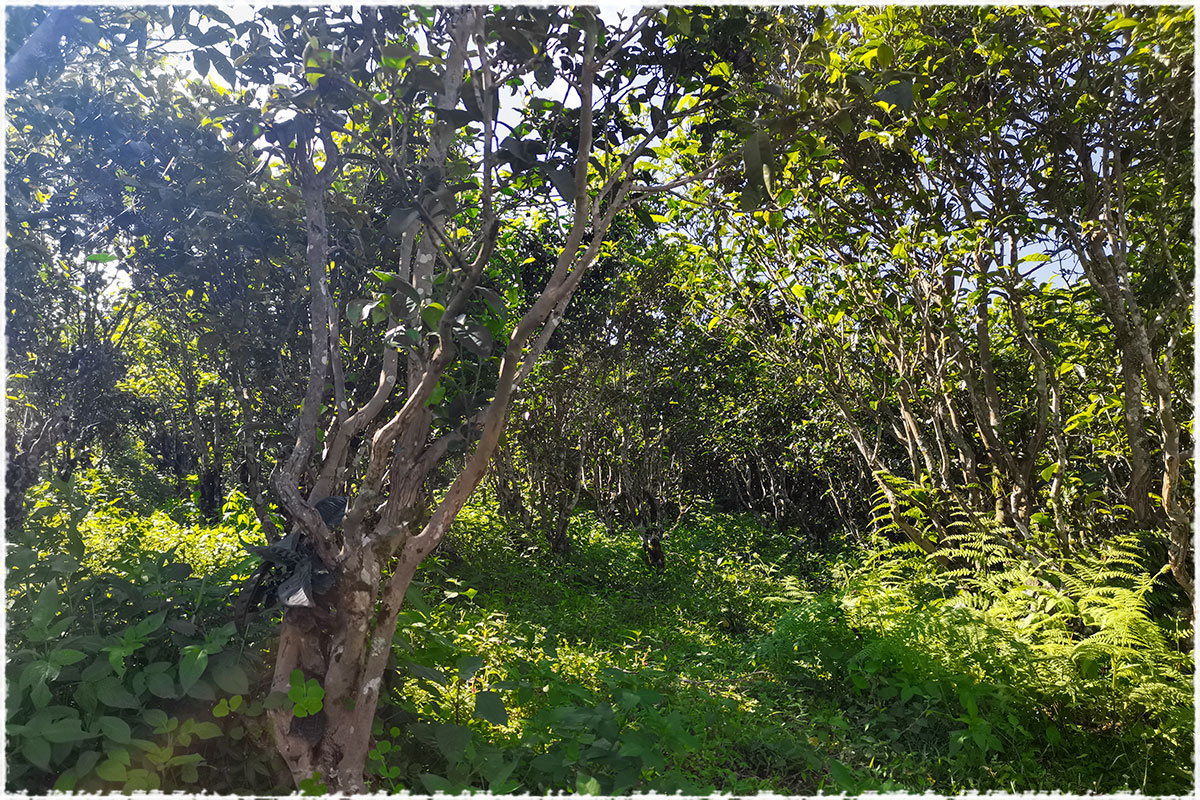
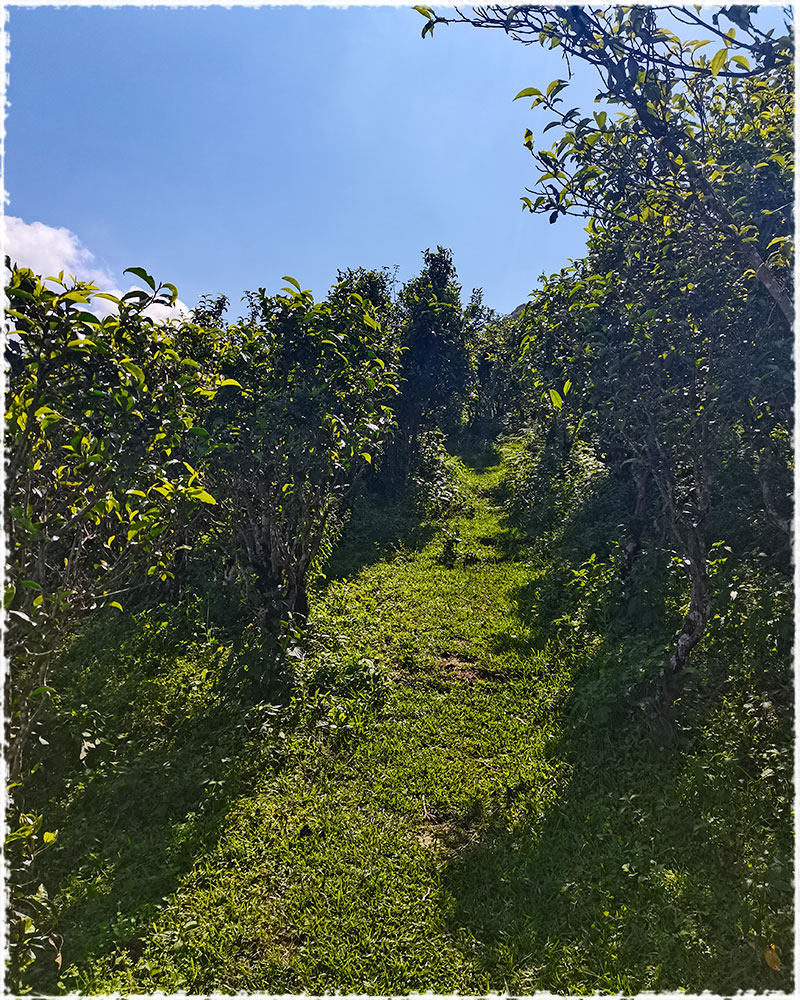
Taohua Natural Village is nestled deep in the mountains of Fengqing County, Yunnan, at an average elevation of around 1,900 meters. Surrounded by mountains and waterways, the area enjoys scenic beauty, year-round mist, clean air, fertile soil, and ample sunlight. The surrounding forests have a high coverage rate with well-preserved vegetation. Tea trees are mainly distributed on mountain slopes, forest edges, and around the village, growing in natural coexistence with broadleaf trees, shrubs, and crops, forming a relatively stable ecological system. Tea trees grown in such an environment develop slowly and accumulate rich internal substances, giving tea a full, mellow taste and delicate, layered aromas. This terroir clearly reflects the ecological character and distinctive mountain essence typical of the Fengqing tea region.
Origin
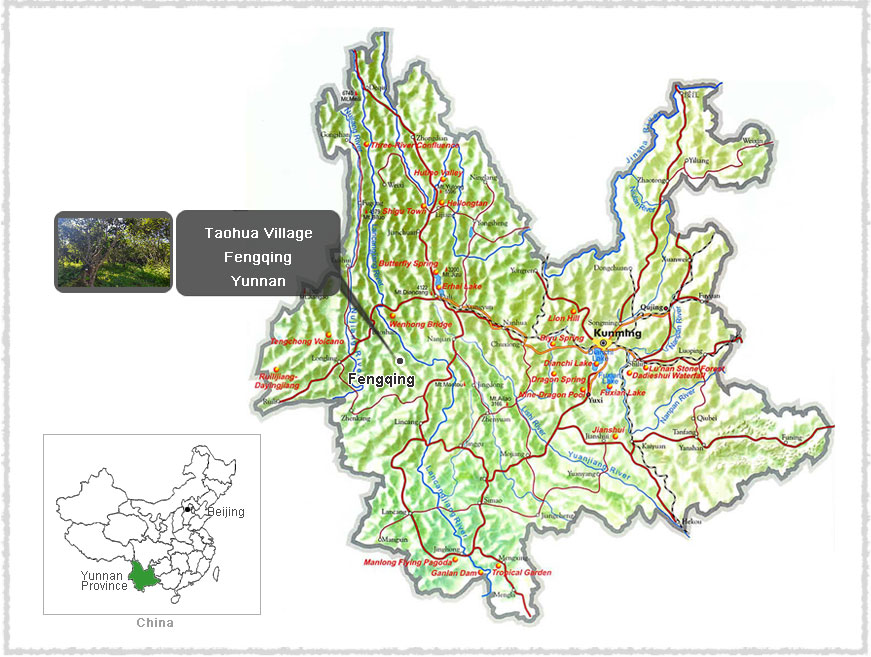
This pu-erh cake comes from the representative pu-erh production region of Fengqing, in the southern part of the Dianxi Longitudinal Valley. Fengqing is a county in the northwestern part of Lincang and is one of the four famous pu-erh production areas among Xishuangbanna, Pu’er, and Baoshan, and is also one of the first birthplaces of tea throughout the entire world. It is also famous as being the hometown of Yunnan black tea in Lincang.
Fengqing holds a long history of tea planting, production, and drinking, and the land itself is beautifully varied between high mountains and snaking rivers.
Tea Bush
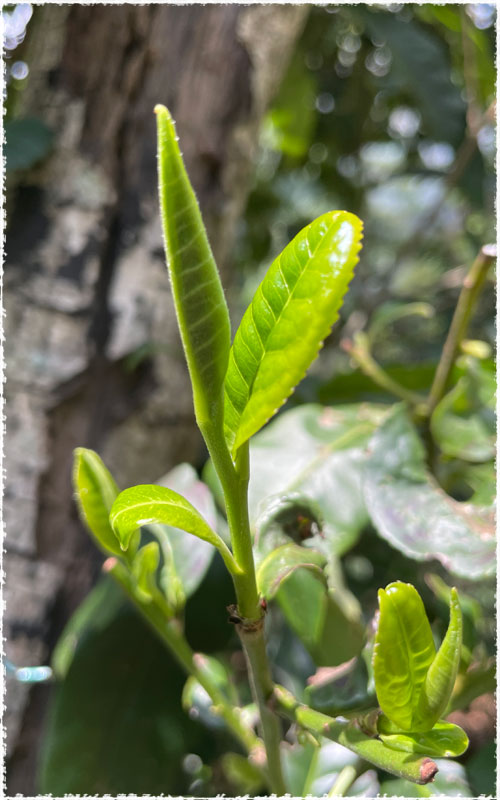
This pu-erh tea is made from the large-leaf subspecies of the Yunnan large-leaf. It propagates sexually and takes the form of an arbour tree, meaning that it can grow to over six meters tall. 1984, the Fengqing large-leaf species was certified by the Chinese government as a national grade. It contains an abundance of tea polyphenols (30.2%) and catechins (13.4%), as well as 2.9% amino acids and 3.2% caffeine.
History
Pu-erh is one of the oldest types of tea in China with a history stretching back over 1700 years to the Eastern Han Dynasty, when the tea was called Jing Cha. It is named after the town of Pu’er in Yunnan province, which was originally the early trading center for this tea. In early history pu-erh was used as a bartering currency in southwest China, with the famed Cha Ma Gu Dao, the Tea Horse Road, being built for the purpose of transporting this tea through the Himalayas to other countries and areas in Tibet.
Customer Reviews
Related Products


























Reviews
There are no reviews yet.