


-
Fast ShippingFree shipping for orders above $40
to most countries. -
Secure PaymentPay with Paypal, Credit Card …
-
Carefully SelectedFrequently Visit Tea Gardens.
Taste Repetitiously -
15 Days RefundNo Questions Asked
Refund Policy
Ripened Pu-erh Tea Resin
Price range: $3.00 through $83.72
Ripened Pu-erh Tea Resin
Summary
| Origin: |
Nannuo Mountain, Menghai County, Yunnan Province, China |
|---|---|
|
Harvest Date: |
April 18, 2008 |
| Dry Leaf: |
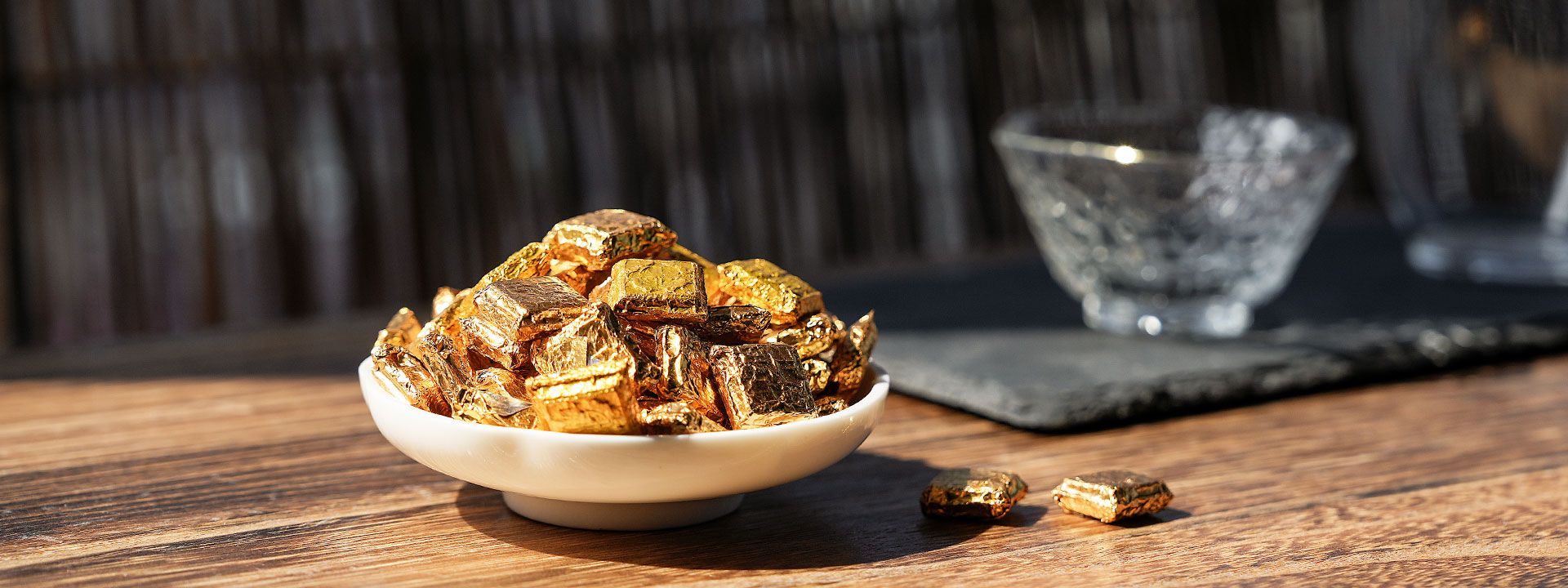
Small instant tea cubes, about 1cm in diameter; about 1g per piece |
| Aroma: |
Sticky rice aroma, aged aroma |
| Liquor: |
Bright deep red |
| Taste: |
Full-bodied and smooth, rich and mellow, with pronounced sticky rice aroma |
| Tea Bush: |
Menghai large-leaf tea bush species (about 600 years old) |
| Tea Garden: |
Shi Tou Village (about 1600m) |
| Caffeine: |
Low caffeine (less than 20% of a cup of coffee) |
| Storage: |
Store in cool, dry place away from sunlight; keep ventilated |
| Shelf Life: |
The aged the better |
Angel's Comment:
The key fragrance note: sticky rice aroma; the compound note is gentle herbal fragrance; the tea liquor is smooth, mellow, and softly sweet.
Tea Resin (茶膏,Cha Gao), also called “Tea Paste”, is a traditional concentrated tea paste developed in China. It was produced by simmering tea leaves for an extended period and condensing the essence into a crystallized extract. This Tea Resin is made from 2008 ripened Pu-erh material, with each piece weighing about 1g. It’s extremely convenient to prepare, just add water and it dissolves instantly, whether hot or cold. The liquor is clean and free of residue, deep red and bright, with a full-bodied, sweet and sticky rice taste. Wherever you are, it’s an easy and quick way to enjoy a cup of ripened Pu-erh.
What is the white powder on Tea Resin?
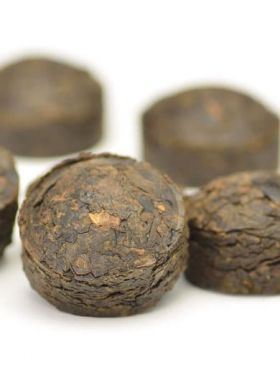
Have you ever noticed a thin layer of white substance on some tea resin? Don’t worry, it’s not mold. This is actually a natural crystalline precipitate formed over time as rich internal components of the tea gradually migrate to the surface during long-term storage. Its main constituents are tea polyphenols, catechins, caffeine, and other compounds inherent to the tea leaves.
Typically appearing white or light gray, this powder is evenly distributed and dry to the touch; a gentle wipe with your finger will leave a fine dust. In the world of tea resin, this “white frost” is regarded as a mark of abundant inner substances, superior craftsmanship, and exceptional quality.
Recommend Brewing Method
|
Tea Garden
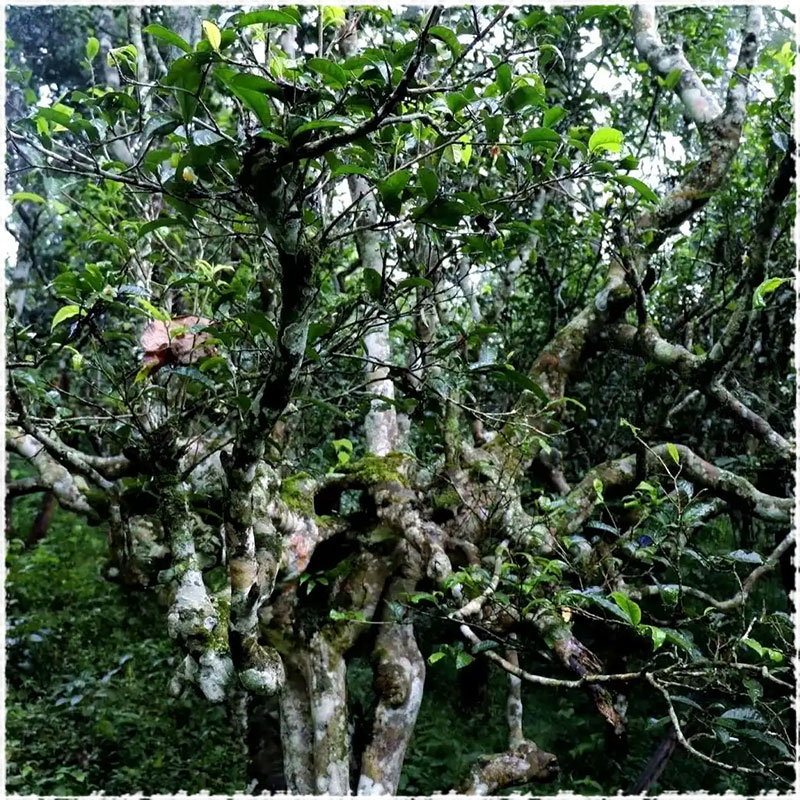
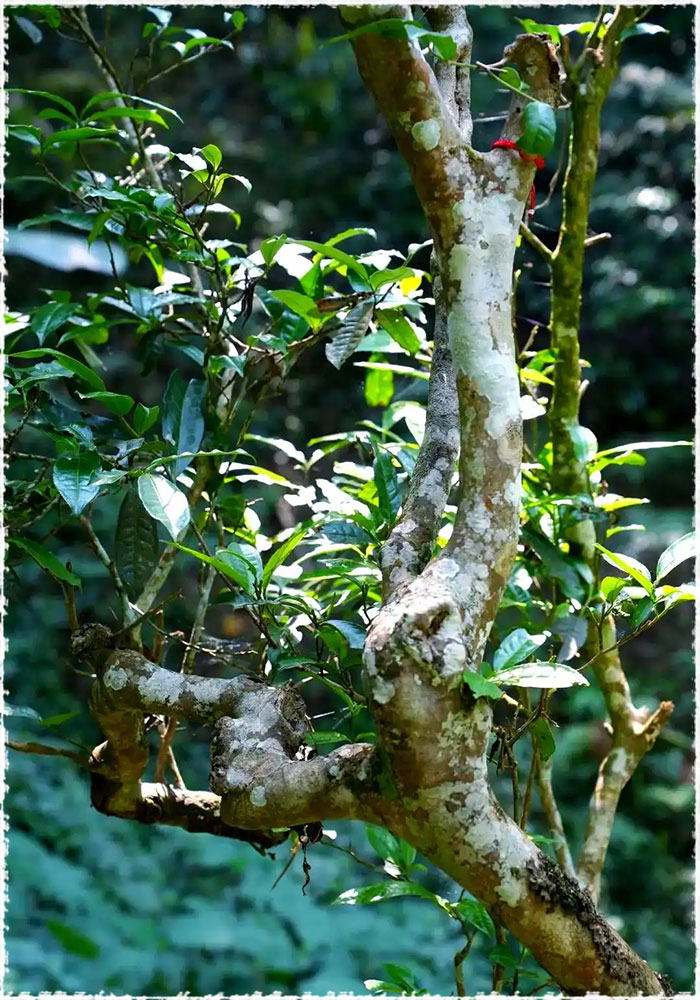
Shi Tou Village is located on the southern mid-slope of Nannuo Mountain, in the core ancient-tea-mountain belt of Xishuangbanna. Sitting at an elevation of about 1400–1700 meters, it has a typical subtropical mountain monsoon climate, warm and humid year-round, with abundant rainfall, frequent mist, and clear day-night temperature differences. Dense forest cover provides natural shade for the tea trees, while the soils—mainly weathered red earth and sandy loam—offer good drainage and rich mineral content. Tea gardens are scattered across mountain slopes and forest edges, where ancient tea trees grow alongside tall trees and shrubs, forming a semi-wild ecological system. In such an environment, tea trees develop deeper root systems, absorb more diverse minerals, and grow slowly, allowing them to accumulate richer internal compounds.
Origin
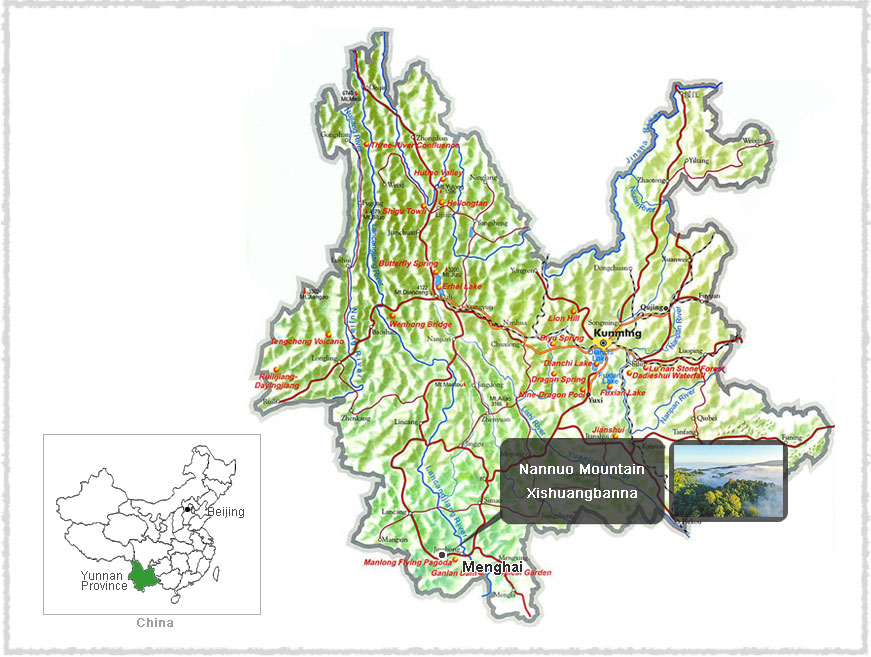
Located east of Menghai County, Nannuo Mountain is among Xishuangbanna's celebrated ancient tea mountains and a key Pu-erh production area in Yunnan. Rising 1,200–1,900 meters above sea level, its forested slopes benefit from a subtropical monsoon climate with ample rainfall, frequent mist, and marked day-night temperature swings, which are perfect conditions for tea cultivation. This terroir yields teas rich in balanced compounds, known for elegant floral notes, gentle sweetness, and a smooth, refined mouthfeel. Blending wild mountain character with harmony, Nannuo Mountain teas, whether raw or ripe, consistently deliver clean, mellow complexity.
Tea Bush
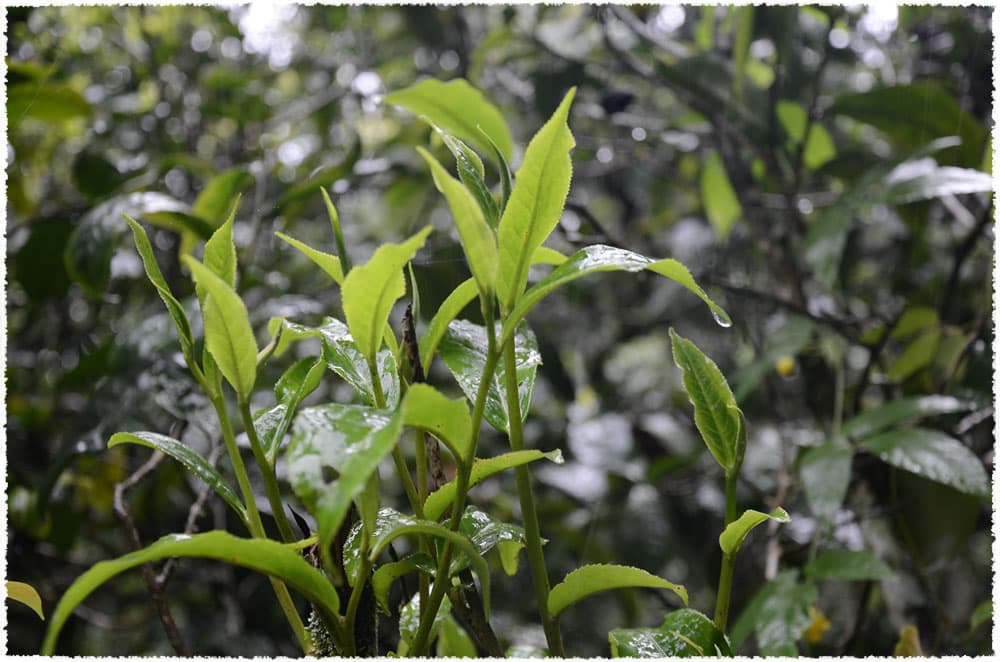
Native to Menghai County in Xishuangbanna, the Menghai large-leaf tea species was rated as the most improved national variety in 1984. It grows up to 7m tall in the wild with bold green leaves noticeably larger than more common varieties, and the buds of this species are yellowish-green and coated in fuzz. The leaves are high in phytochemicals, with one bud and two leaves containing 2.3% amino acids, 32.8% polyphenolic compounds, 4.1% caffeine, and 18.2% catechinic acid. Because of this, pu-erh tea made from this species is high in quality, rich yet soft in taste, and maintains a full-bodied essence.
Customer Reviews
Related Products


























Reviews
There are no reviews yet.