
-
Fast ShippingFree shipping for orders above $40
to most countries. -
Secure PaymentPay with Paypal, Credit Card …
-
Carefully SelectedFrequently Visit Tea Gardens.
Taste Repetitiously -
15 Days RefundNo Questions Asked
Refund Policy
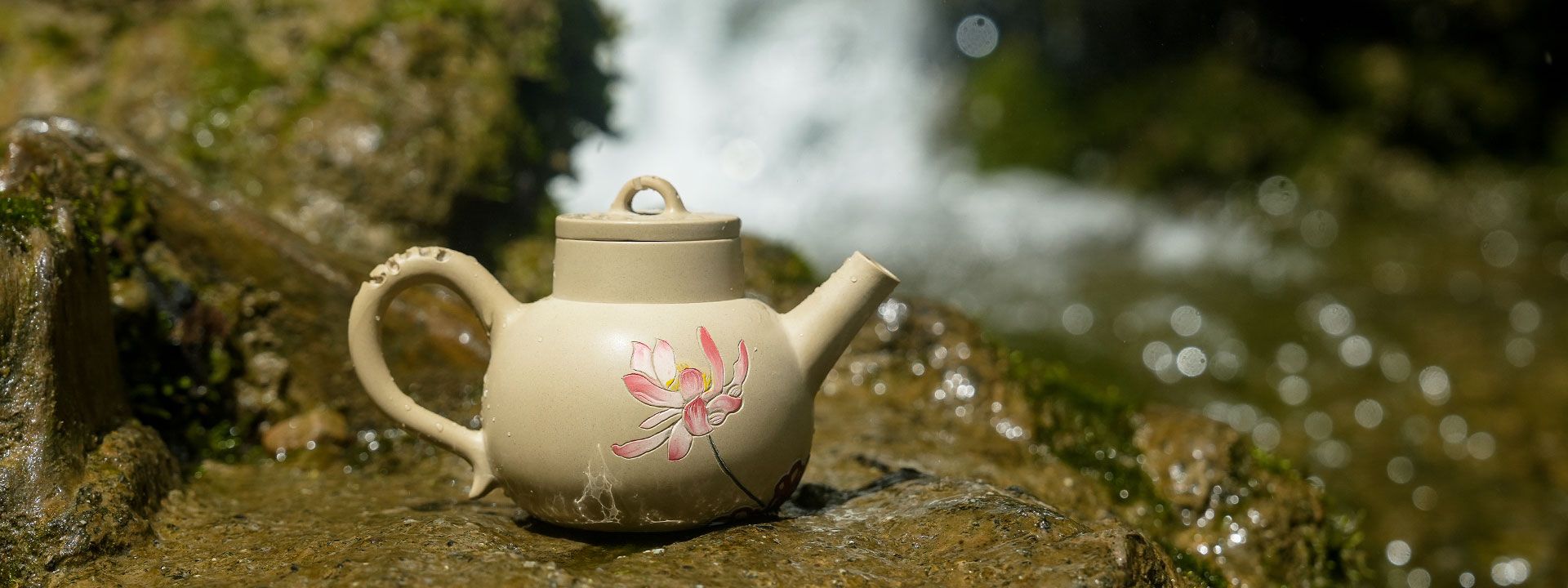
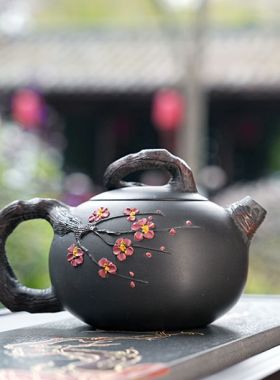
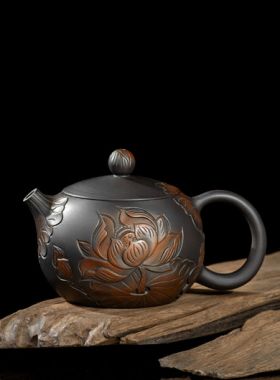
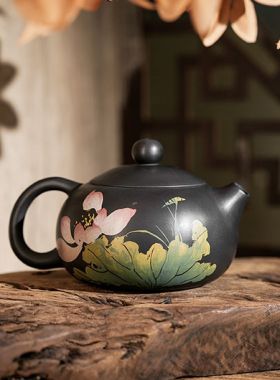
Handmade Jianshui Zitao Pottery Color Inlay & Relief Teapot - Lotus I
$109.00
Handmade Jianshui Zitao Pottery Color Inlay & Relief Teapot - Lotus I
0 Reviews
Summary
| Material: |
Jianshui Pottery |
|---|---|
|
Origin: |
Jianshui (建水) County, Yunnan Province, China |
|
Craft: |
100% Hand-made, so the body of the teapot may have handmade traces (Note: teapots of 100% hand-made can’t be exactly the same as shown on the picture. So it is normal that in a few cases the teapot may be very slightly different from that on the picture, however, the quality is always the same.) |
|
Capacity: |
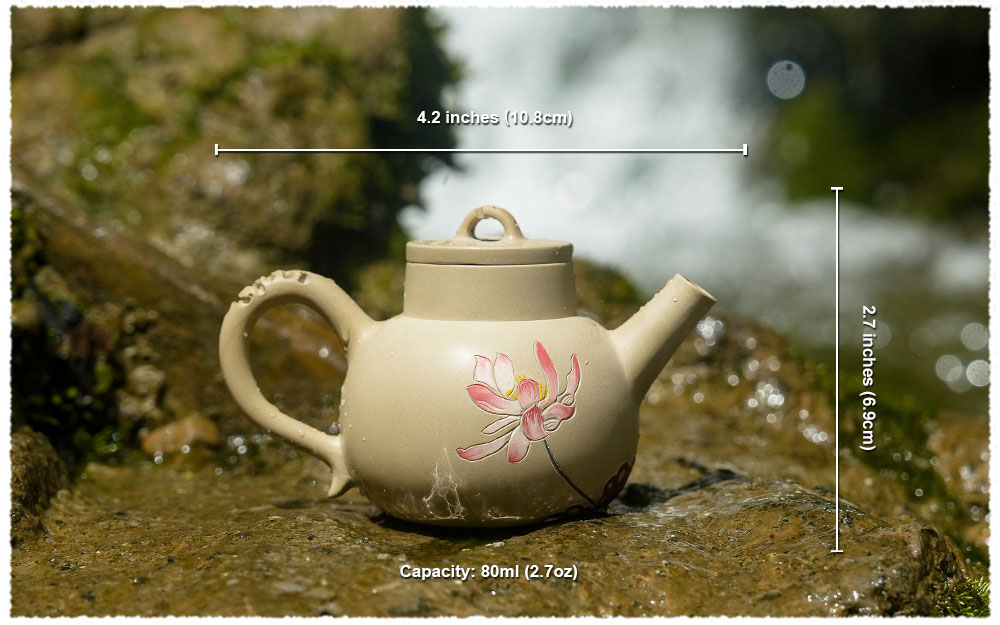
80ml |
|
Dimensions: |
4.2” W x 2.7” H (10.8cm x 6.9cm) |
|
Usage: |
Great for brewing Oolong Tea, Pu-erh Tea, Black Tea |
Angel's Comment:
A finely crafted Jianshui teapot series, each piece is handmade and one of a kind. Comfortable and easy to use, suitable for brewing a wide variety of teas.
This series of Jianshui Zitao teapots is meticulously crafted using a combination of traditional inlay (彩填) and relief carving (浮雕) techniques. Each teapot is hand-engraved by skilled artisans, then inlaid with natural clays of varying colors. After high-temperature firing and repeated polishing, the surface reveals a refined texture with subtle, enduring hues. The decorative patterns are not merely applied to the surface, they are integrally fused with the body of the teapot.
All these pieces share a unified teapot form, maintaining harmony in proportion and line. At the same time, each teapot features distinct motifs, carving details, and clay variations. No design is repeated, making every piece truly one of a kind. You to choose according to your personal preference.
About “Cai Tian”
“Cai Tian” (Color Inlay) is the soul of Jianshui Zitao. Its full name, “Yin Ke Yang Tian” (incised carving with raised color inlay), reflects its distinctive process: first carving the outlines of calligraphy or painting, then filling them with colored clay, allowing the artwork to gain a lasting, almost permanent vitality on the ceramic surface. Main Steps:
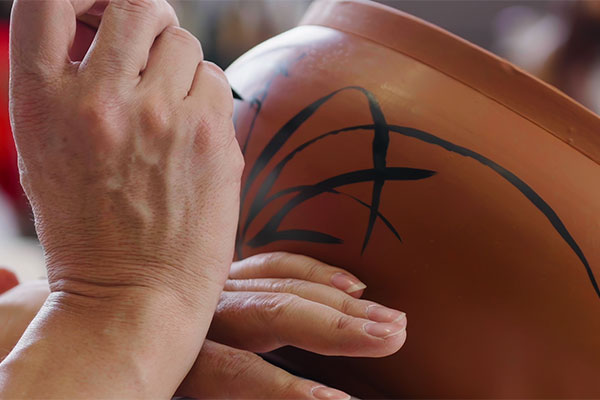
1. While the clay body is still slightly damp, use ink to compose the design, including poetry, calligraphy, or pictorial motifs directly onto the surface.
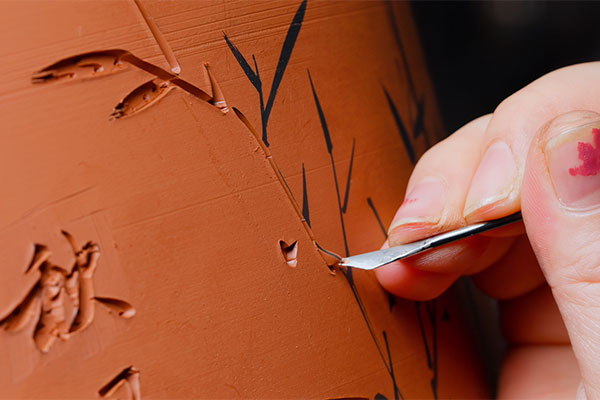
2. Following the inked outlines, artisans use specialized carving tools to carefully remove the clay within the design, creating grooves of even depth. This step requires intense concentration; even a slight miscalculation in pressure can damage the piece.
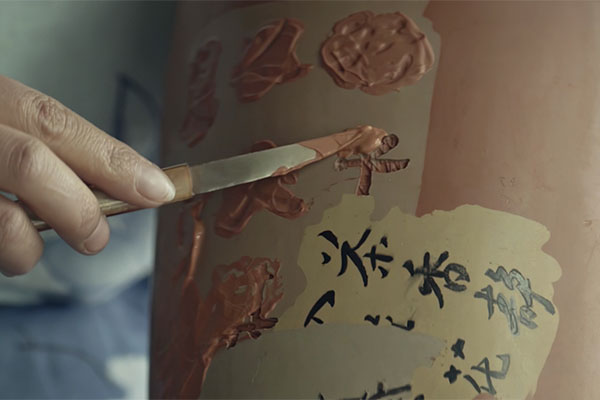
3. Finely prepared colored clays are then meticulously inlaid into the carved grooves. For designs with rich coloration, the process of “carving and filling” must be repeated multiple times to achieve complex layers and subtle gradations.
4. After the inlay is complete, the surface is leveled and compressed to ensure a seamless bond between the colored clay and the body. The teapot then undergoes further refinement, firing, and polishing to achieve its final finish.
About Relief (Dui Diao / Applied Relief Decoration)
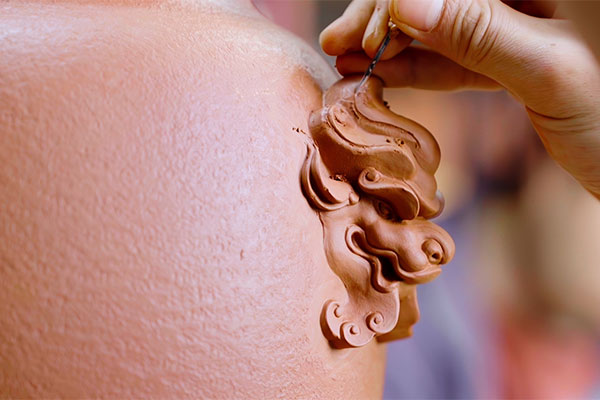
If cai tian (color inlay) is painting on a flat surface, then dui diao is “sculpting” on the teapot body, bringing Zitao decoration from two dimensions into three. This technique involves building up colored clay on the surface of the vessel to create raised, three-dimensional motifs. It can achieve effects ranging from low relief and high relief to forms approaching full sculpture in the round. Flowers, birds, fish, insects, landscapes, and figures seem to “grow” out of the teapot, offering a tactile presence and stronger visual impact. The process begins with preparing clays of different colors. The artisan then “paints” directly onto the clay body, but in a sculptural manner—layer by layer. Each added layer must be carefully compressed and refined with tools while still semi-dry, allowing intricate details to be carved and shaped. This repeated process builds up rich depth and lifelike realism, achieving a highly dimensional and expressive result.
Material
The clay of Jianshui Zitao comes from Wucai Mountain in Jianshui County, Yunnan. The common clays are purple, white, blue, yellow, and other colors. Jianshui pottery has the reputation of "hard as iron, bright as water, smooth as jade and sound like a chime". It contains high iron content, the made utensils have high hardness, and the texture is fine with metal-like texture. The making of Jianshui utensils pays attention to fine workmanship, especially decoration. It uses calligraphy engraving and colorful-mud inlaying as the main technology, integrating painting, calligraphy, engraving, inlay, and other decorative arts, which is extremely practical and ornamental.
Origin
Jianshui County is located in the eastern part of Yunnan Province. The terrain is high in the south and low in the north. The Wulao Peak in the south is the highest point with an elevation of 2515 meters. The discovery of the pottery balls and pottery net pendants dating back more than 3,500 years in the Yanzidong Neolithic Site in Jianshui County proves that Jianshui had primitive pottery craftsmanship as early as the Neolithic Age, and Jianshui ceramics sprouted in the late Neolithic Age.
History
Jianshui Zitao went through the Han, Tang and Song dynasties and grew up in the Yuan, Ming and Qing dynasties. There is a saying of “Celadon famous in Song dynasty, blue and white porcelain famous in Ming dynasty and Zitao famous in late Qing dynasty”.
In 1921, Jianshui Zitao Pottery won the Fine Arts Award at the Panama International Fair.
In 1953, at the National Folk Arts and Crafts Exhibition held in Beijing, Jianshui Zitao Pottery was listed as one of China's four famous potteries by the Ministry of Culture.
In July 2016, the former AQSIQ approved the implementation of geographical indication product protection for "Jianshui Zitao Pottery".
Customer Reviews
Related Products


























Reviews
There are no reviews yet.